Legal Newsletters: Why Personal Injury Firms Still Send Them
Caseload MarketingNovember 12, 2026
Author: Caseload Marketing
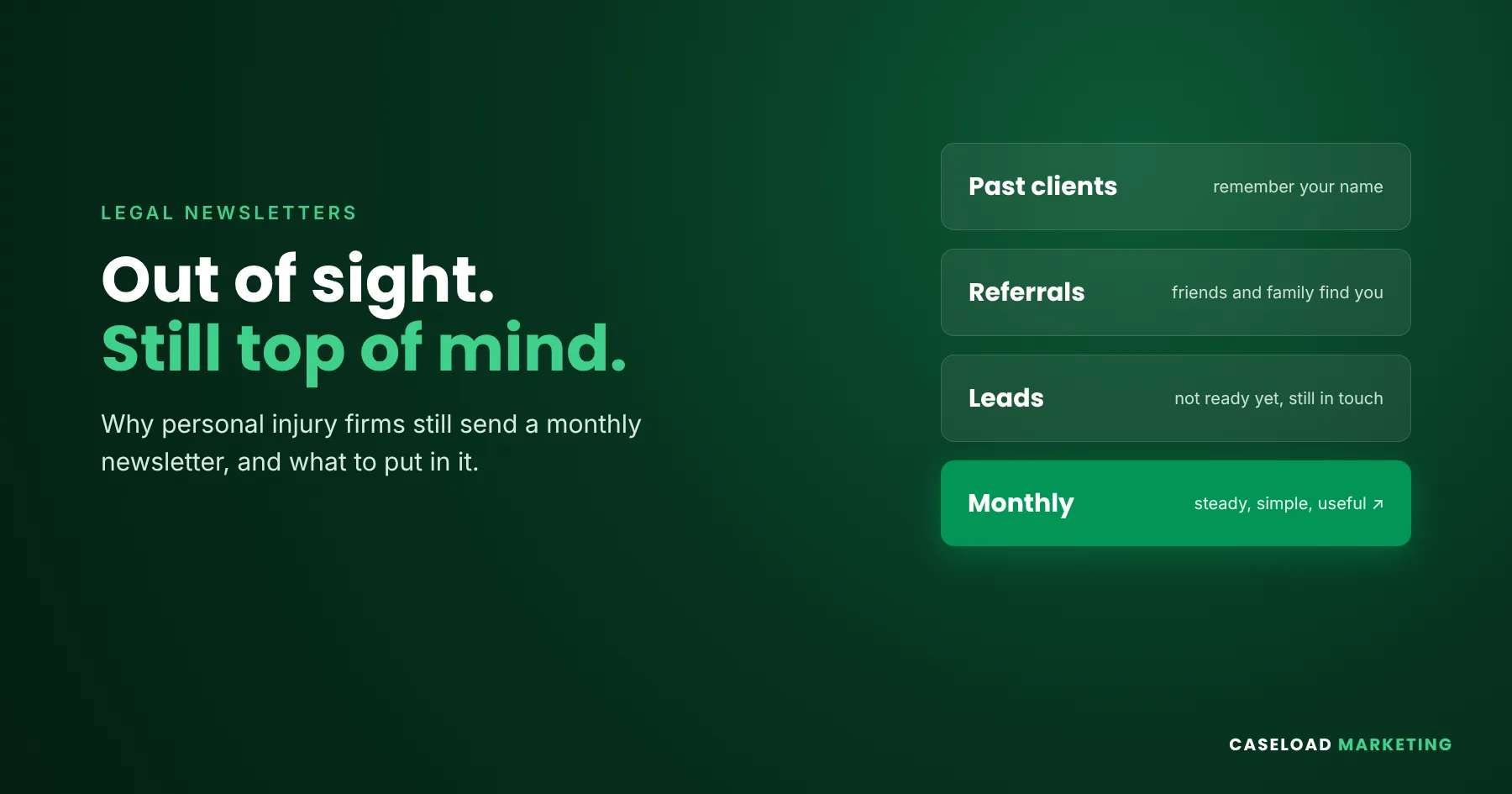
What is a legal newsletter? It is a regular email, usually monthly, that a law firm sends to past clients, contacts and people who asked about a case. For personal injury firms, a legal newsletter keeps the firm’s name familiar between cases, so when someone is hurt, or a friend or family member is, the firm is the one they remember and call.
Most personal injury clients only need a lawyer once or twice in their lives. After a case closes, the relationship usually goes quiet. Months later, a neighbor is hurt in a crash and asks who they should call. Whether the answer is your firm often depends on whether that past client still remembers your name.
That is the job of a legal newsletter. This guide explains who it is for, what to put in it, how often to send it and how personal injury firms keep it simple and within the rules. It is general marketing information, not legal advice.
Why personal injury firms still send newsletters
Social media posts disappear in a day and ads stop when the budget stops. A newsletter lands in the inbox of people who already know the firm, every month, at a low cost. For a personal injury firm, that steady presence does three things:
It brings in referrals. Past clients who hear from the firm regularly are more likely to recommend it to friends, family and co-workers.
It brings back people who were not ready. Some people ask about a case and then go quiet while they recover or decide. A newsletter keeps the door open.
It builds trust. Useful, friendly content shows the firm cares about people beyond a single case.
Because personal injury firms cannot predict when someone in their network will need help, being remembered at the right moment matters more than any single email.
Who a legal newsletter is for
A legal newsletter serves two groups: people who know the firm and people still deciding.
Past clients and contacts
Former clients, their families, referral partners and local contacts already know the firm. The newsletter reminds them the firm is still there and makes it easy to pass the name along.
Leads who were not ready yet
Some people fill out a form or call, then stop responding. They may still be in treatment or simply not ready to decide. With their consent, a monthly newsletter keeps the firm in mind without pressure.
What to put in a legal newsletter
The best newsletters are short, useful and easy to scan. Most personal injury firms rotate a few simple sections:
Six sections that keep a legal newsletter useful and easy to read.
A firm update. A short, friendly note from the firm or a team introduction.
A safety tip. Seasonal advice on driving, home safety or workplace safety.
A plain-English answer. One common question, such as what to do after a car accident, explained simply.
Community news. Local events, sponsorships and good news from the area.
A referral reminder. A gentle note that the firm is here if someone they know needs help.
Clear contact details. Phone number, website and how to reach the firm.
Content should stay general and positive. A newsletter is not the place for case details, client names or anything that sounds like a promise.
How often should a personal injury firm send a newsletter?
Monthly works for most personal injury firms. It is often enough to stay familiar and rare enough that people do not feel spammed. Consistency matters more than length: a short newsletter that arrives every month does more than a long one that arrives twice a year.
Common legal newsletter mistakes to avoid
Sending only when there is news. Irregular emails are easy to forget. A steady monthly rhythm keeps the firm familiar.
Writing like a legal brief. Long, technical articles lose readers. Short sections in plain English get read.
Making every email a sales pitch. People stay subscribed when most of the content is useful, with only a light reminder about the firm.
Forgetting mobile readers. Many people read email on their phone, so keep the layout simple and the text easy to read.
Buying email lists. Emailing people with no relationship to the firm hurts trust and can break email and advertising rules.
Avoiding these mistakes keeps the newsletter something people expect and open, rather than something they unsubscribe from.
Keep your legal newsletter within the rules
Commercial emails in the US must follow the CAN-SPAM Act. The FTC’s CAN-SPAM guide explains the basics, such as using accurate sender details, including a physical address and giving people an easy way to unsubscribe.
Lawyer advertising rules can apply too. Under ABA Model Rule 7.3 and similar state rules, communications to people who are not current or former clients may count as advertising, and some states require labels or records. Check your state bar’s rules, and only email people who gave permission or already have a relationship with the firm.
Newsletters and other email marketing for law firms
A newsletter is one part of email marketing. Many personal injury firms also send a short welcome email when a new lead comes in and simple follow-ups for leads who have not responded. Together with Meta ads that bring in new leads, email keeps those leads and past clients engaged over time. Our guide to email marketing for law firms explains how these pieces fit together, and our article on personal injury lead generation covers where new leads come from.
In the newsletters we send for injury firms, the short, friendly issues with one useful tip tend to get the most replies and referrals.
How Caseload Marketing helps with legal newsletters
Caseload Marketing writes and sends monthly newsletters and runs email marketing for law firms that handle personal injury cases nationwide, alongside Facebook ads for law firms. Every issue is written for the firm’s audience and approved by the firm before it goes out. Learn more about our law firm marketing.
Key takeaways
A legal newsletter is a regular email that keeps a law firm in mind with past clients, contacts and leads.
For personal injury firms, it brings in referrals and brings back people who were not ready yet.
Keep it short and useful: a firm update, a safety tip, a plain-English answer, community news and clear contact details.
Monthly works for most firms; consistency matters more than length.
Follow CAN-SPAM and your state’s lawyer advertising rules, and only email people who agreed to hear from you.
A newsletter works best alongside welcome emails, lead follow-ups and Meta ads.
Frequently asked questions
What is a legal newsletter?
A legal newsletter is a regular email, usually monthly, that a law firm sends to past clients, contacts and people who asked about a case. It shares useful information and keeps the firm’s name familiar.
Why do personal injury firms send newsletters?
Most personal injury clients need a lawyer rarely, so staying in touch between cases matters. A newsletter keeps the firm in mind, which brings in referrals and helps people who were not ready come back.
What should a newsletter for personal injury lawyers include?
A short firm update, a seasonal safety tip, one plain-English legal answer, community news, a gentle referral reminder and clear contact details work well.
How often should a law firm send a newsletter?
Monthly works for most personal injury firms. It keeps the firm familiar without overwhelming people, and steady timing matters more than long issues.
Is a law firm newsletter considered advertising?
It can be. Communications to people who are not current or former clients may count as lawyer advertising under state rules. Check your state bar’s rules and follow the CAN-SPAM Act for commercial email.
Who should be on a law firm’s newsletter list?
Past clients, their families, referral partners and leads who agreed to hear from the firm. Never add people without permission or a relationship with the firm.
Can Caseload Marketing write our firm’s newsletter?
Yes. Caseload Marketing writes and sends monthly newsletters for personal injury firms nationwide, and each issue is approved by the firm before it goes out.
Last updated: November 12, 2026. This article is general marketing information for law firms, not legal advice.
Book a free account review. We will look at your ad account, creative, intake and tracking, and tell you what we would change, whether or not you work with us.
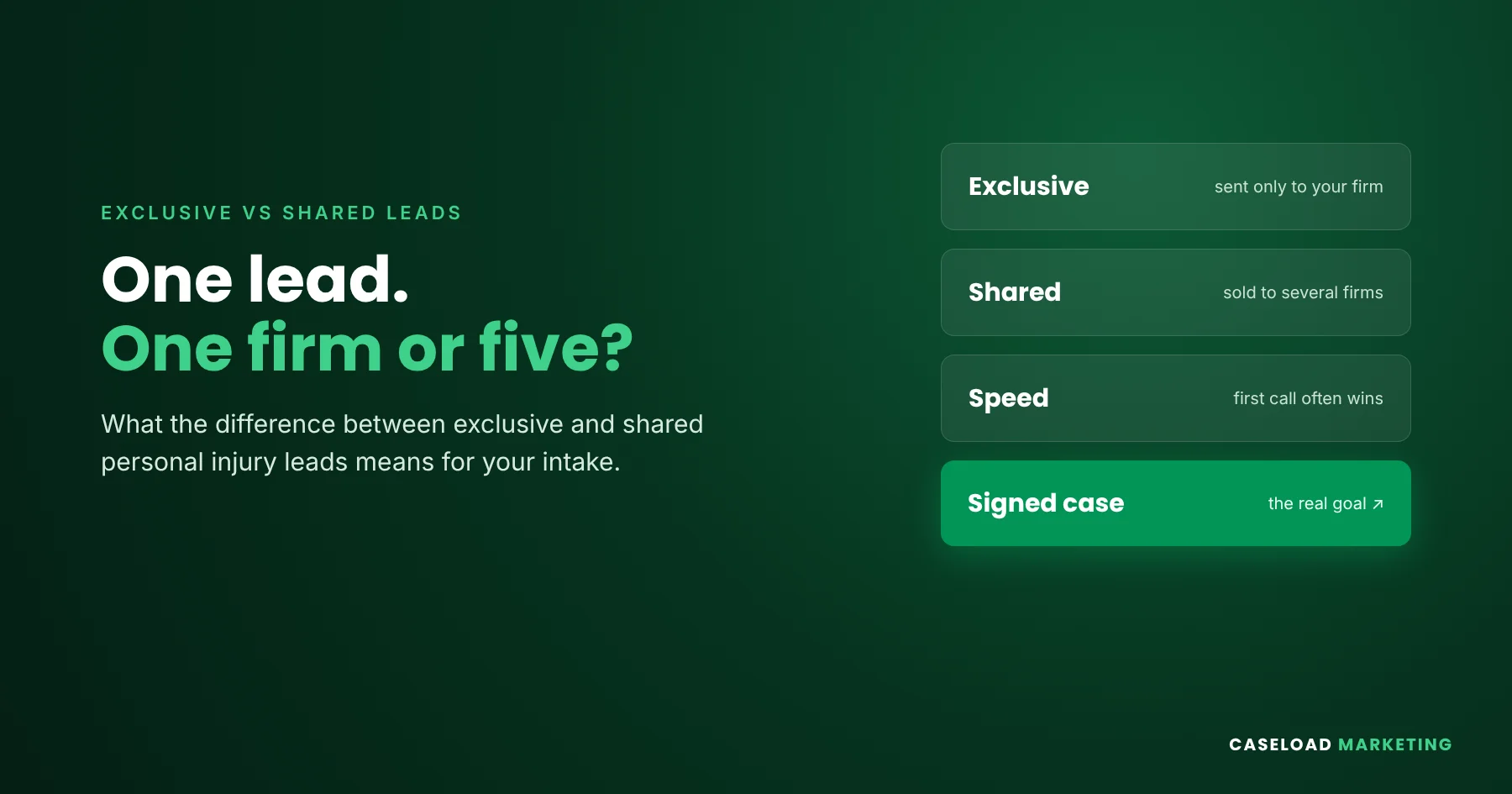
Exclusive vs shared personal injury leads comes down to who else gets the same inquiry. Exclusive leads are sent to only one law firm, while shared leads are sold to several firms at the same time. With an exclusive lead, only your intake team contacts the person. With a shared lead, the same person may hear from several firms within minutes, so speed and follow-up decide who signs the case.
Truck accident leads are inquiries from people hurt in crashes involving commercial trucks, such as semi-trucks, 18-wheelers and delivery vehicles. They differ from car accident leads because more parties can be involved, federal trucking rules apply, evidence needs to be requested early and injuries are often more serious, so intake needs to move quickly.
The personal injury marketing ideas that suit a busy firm are the ones that keep running without daily attention: Facebook and Instagram lead ads in the firm's service area, retargeting for people who visited but didn't call, a monthly client newsletter, a simple review-request habit and fast intake follow-up on every new inquiry.
What is a legal newsletter? It is a regular email, usually monthly, that a law firm sends to past clients, contacts and people who asked about a case. For personal injury firms, a legal newsletter keeps the firm's name familiar between cases, so when someone is hurt, or a friend or family member is, the firm is the one they remember and call.
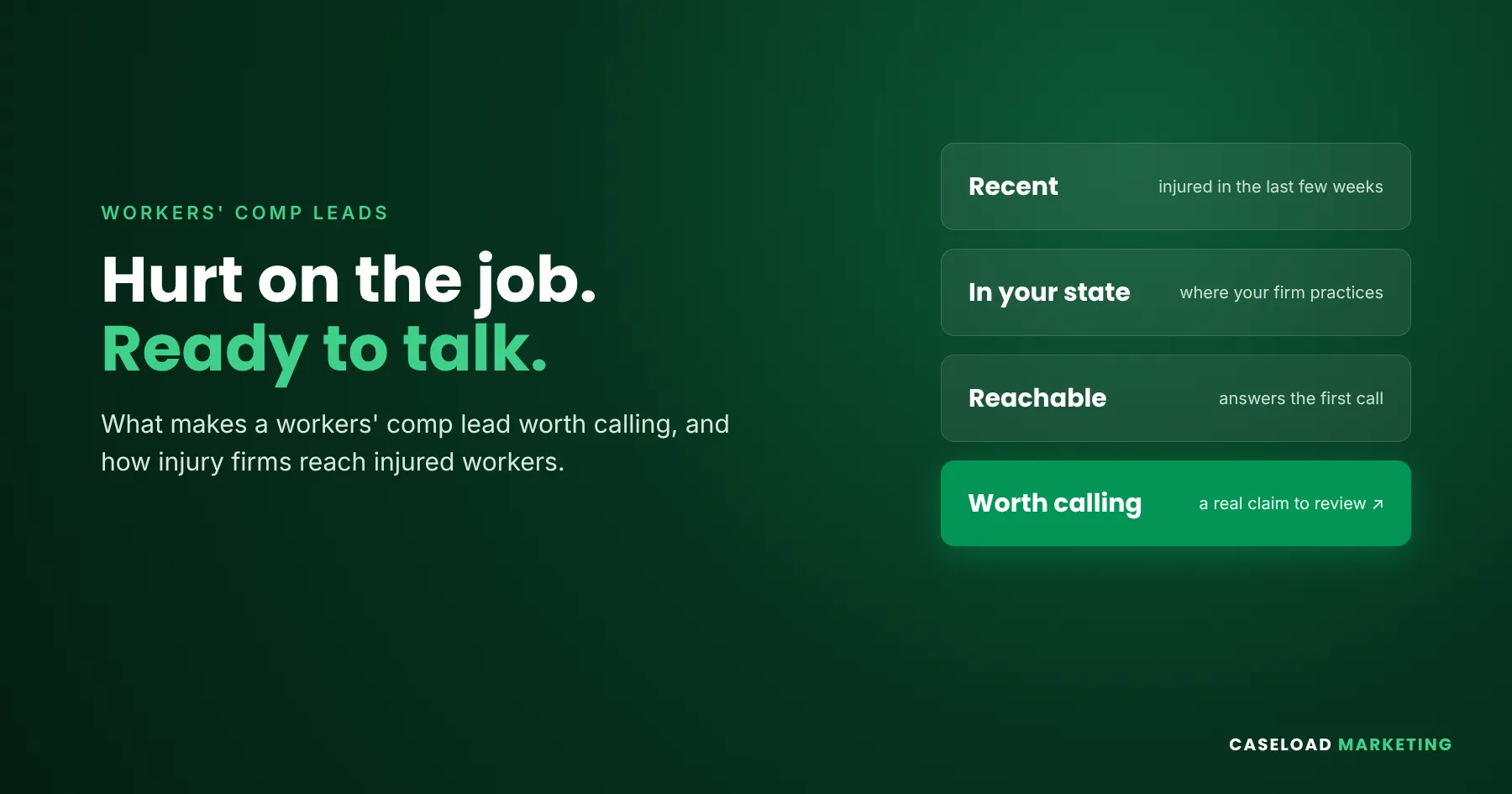
What are workers' comp leads? They are people who were hurt on the job and want help with a workers' compensation claim. The workers' comp leads worth calling come from recently injured workers in a state where the firm practices, who can be reached quickly and have agreed to be contacted. Personal injury firms that handle these cases usually reach them through Meta ads on Facebook and Instagram, simple lead forms and fast intake follow-up.
Can lawyers advertise on Facebook? Yes, in every US state, on both Facebook and Instagram. ABA Model Rule 7.2 lets lawyers share information about their services through any media, and a Facebook ad shown to a general audience counts as advertising, not solicitation. The ad still has to be truthful, name a responsible lawyer or firm, follow your state bar's rules and pass Meta's ad review.
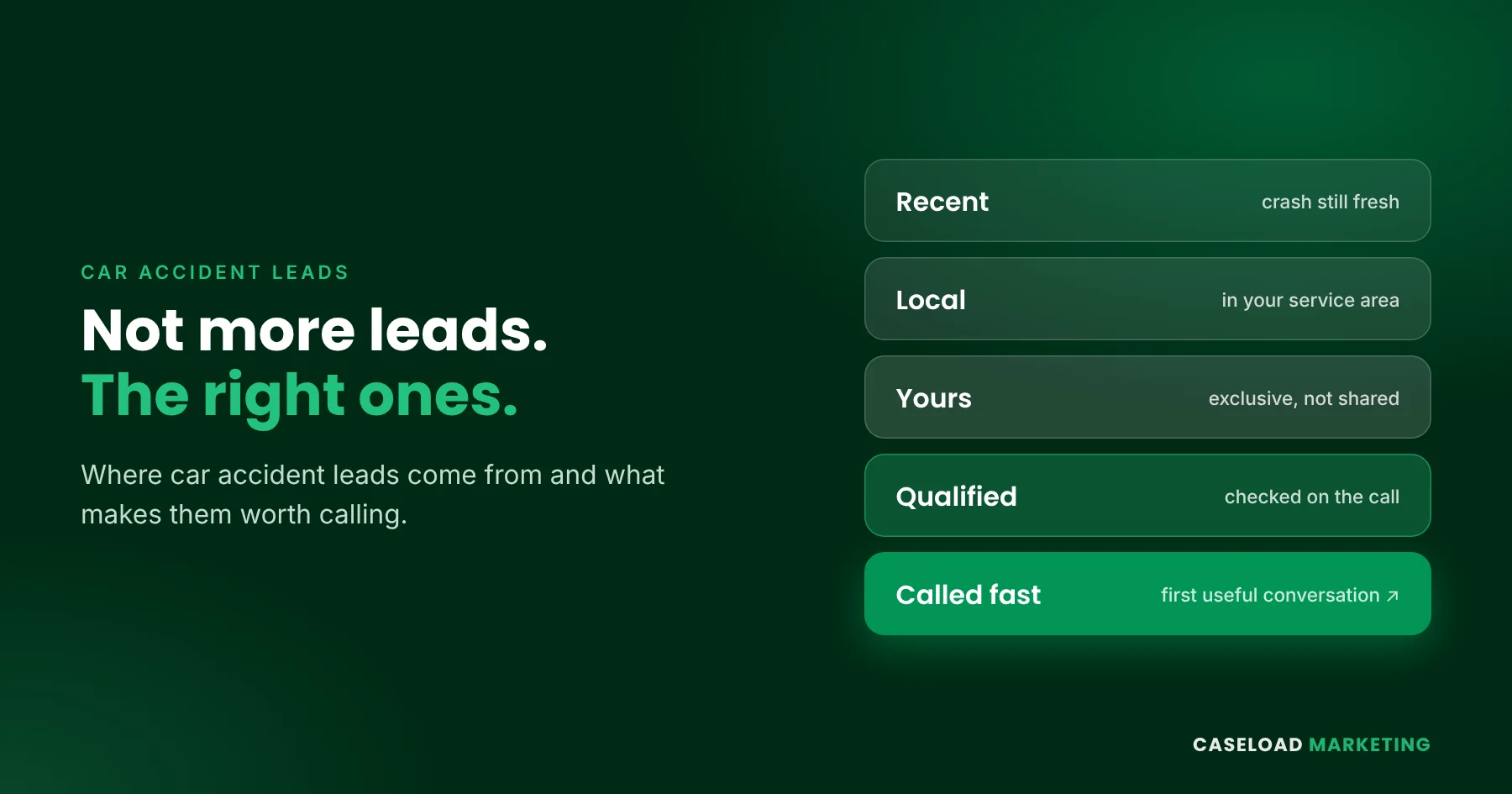
Car accident leads are people who were hurt in a crash and reached out to a law firm, by form, call or message, about a possible claim. They come from ads, search, referrals and lead vendors. The car accident leads worth the most are recent, in the firm’s service area, generated by the firm itself or exclusive to it, and called back quickly by an intake team that knows what to ask.
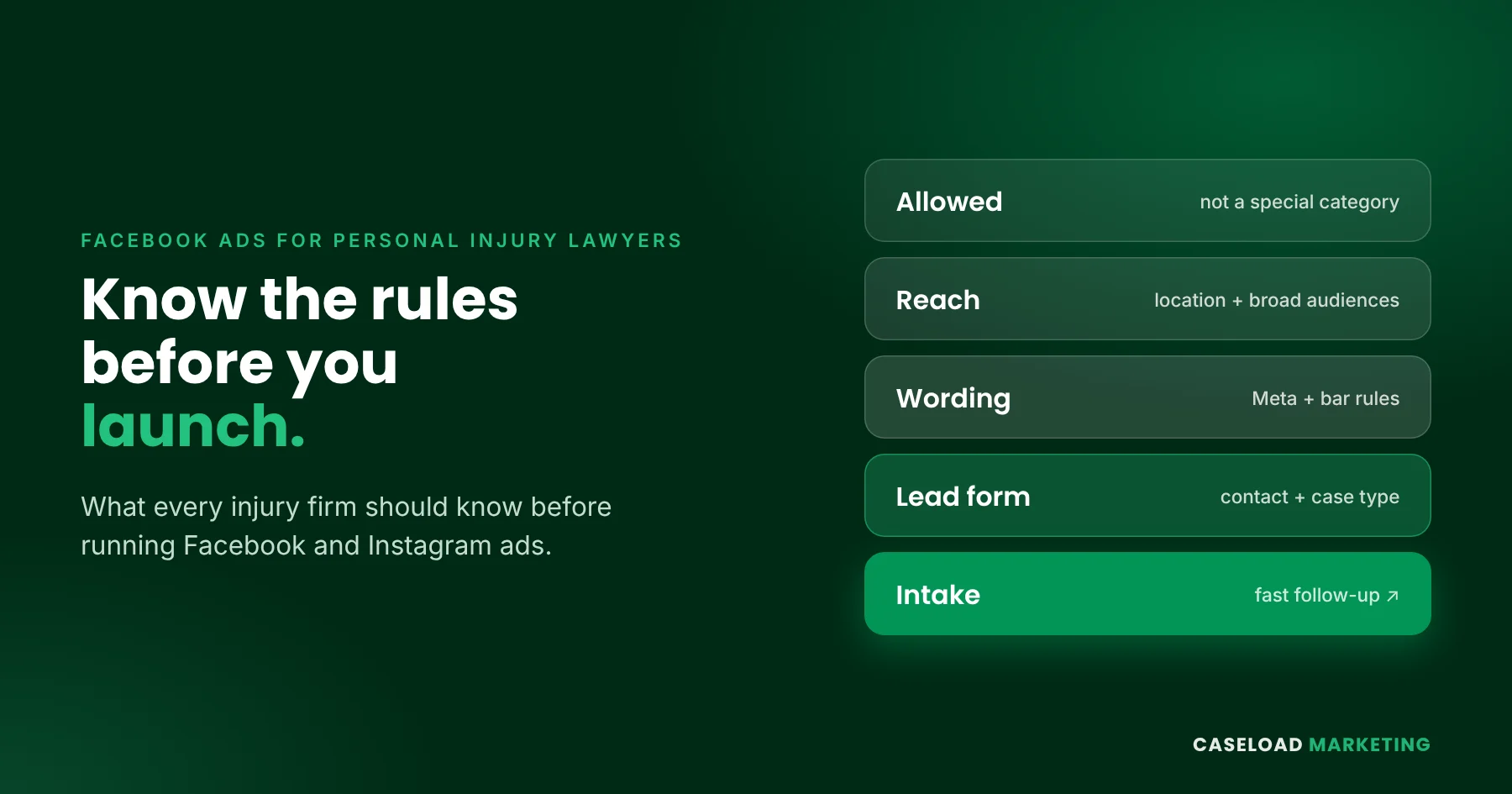
Facebook ads for personal injury lawyers work best when they reach people in the firm’s area before those people start searching, follow both Meta’s ad policies and the state bar’s advertising rules, and send every inquiry to an intake team that answers fast. Location, compliant wording, a simple lead form and quick follow-up matter more than clever creative.
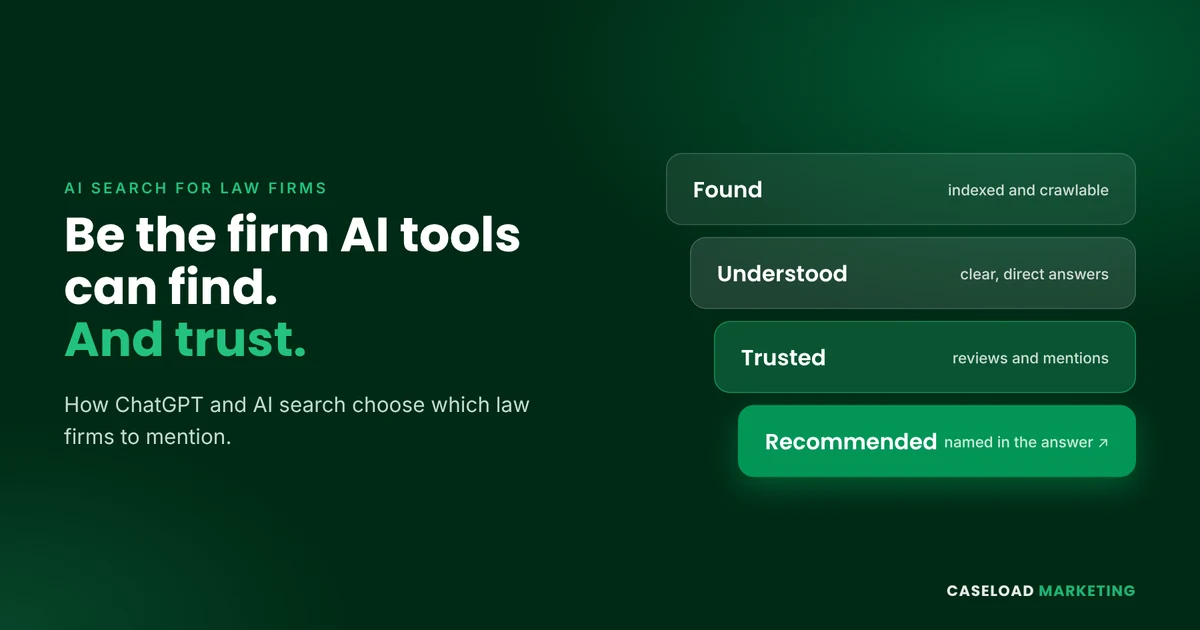
AI search tools like ChatGPT, Google AI Overviews, Gemini, Perplexity and Copilot recommend law firms they can find, understand and trust. They draw on search indexes, the firm’s own website, reviews and mentions across the web. Firms that answer questions clearly, describe themselves the same way everywhere and keep earning real reviews give these tools the most to work with.
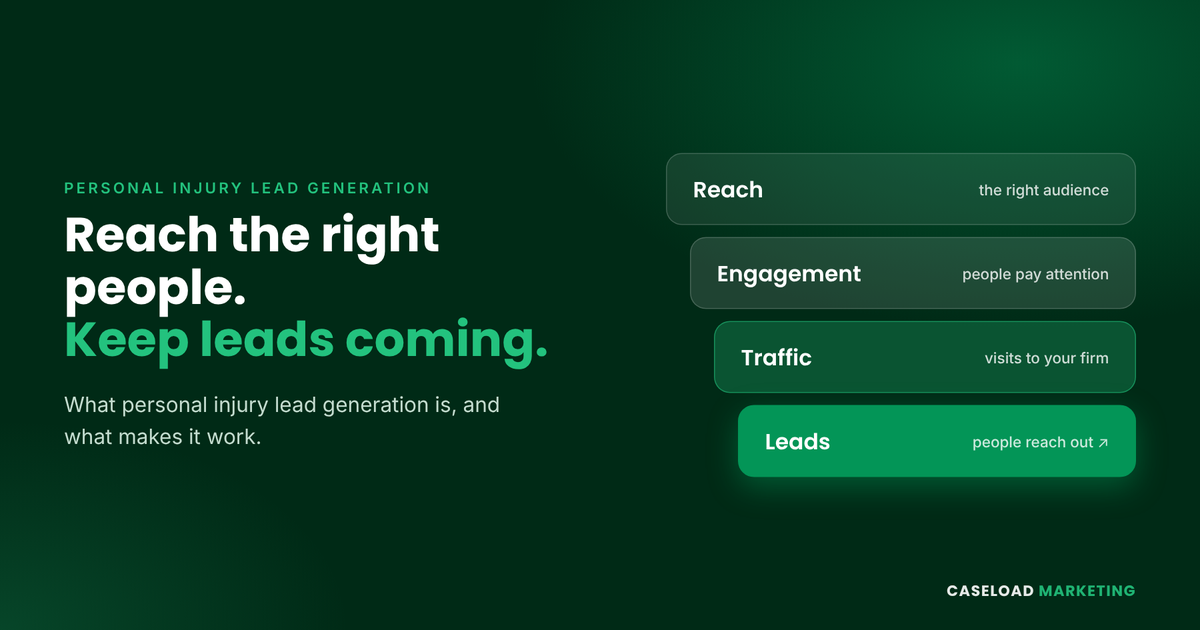
Personal injury lead generation is how a law firm reaches people hurt in an accident and gives them an easy way to get in touch. The strongest programs combine broad reach, messages that speak to specific case types, and a steady month-after-month presence so new leads keep coming in.
Our Clients
We partner exclusively with one firm per market to ensure a competitive edge in the highly competitive field of personal injury lawyer advertising, avoiding competition among our clients.
Due to the sensitive nature of our work, we maintain confidentiality in our partnerships. Our impressive client retention rate of 90% over a 12-month period underscores our commitment to client satisfaction and success. If you're interested in exploring our availability in your market, please contact us.
Need a boost in marketing your law firm? We've got you covered!
Let's discuss how we can elevate your strategy. Explore our services or get in touch—let's ensure your firm stands out!