Workers’ Comp Leads: A Guide for Personal Injury Firms
Caseload MarketingNovember 11, 2026
Author: Caseload Marketing
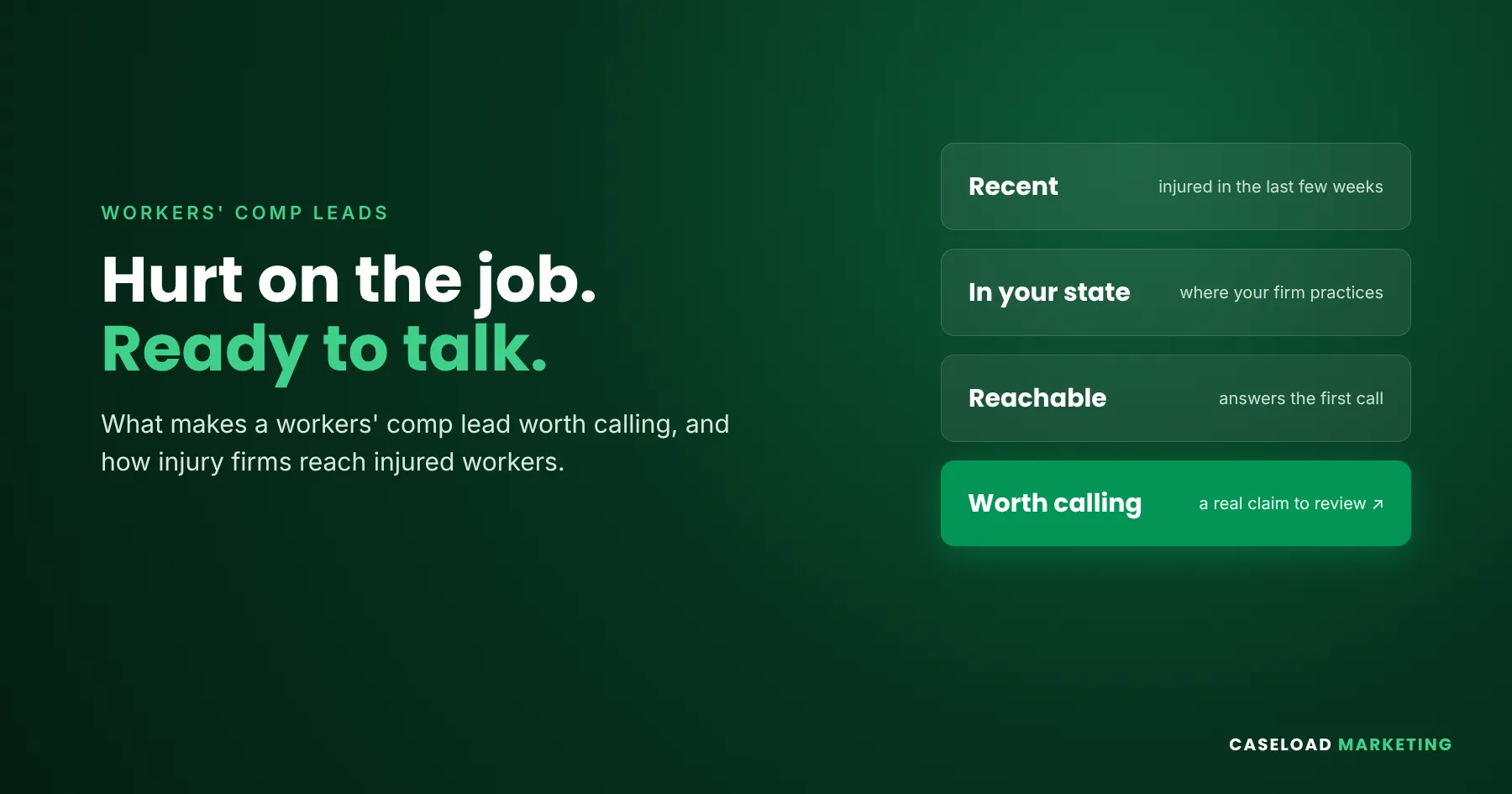
What are workers’ comp leads? They are people who were hurt on the job and want help with a workers’ compensation claim. The workers’ comp leads worth calling come from recently injured workers in a state where the firm practices, who can be reached quickly and have agreed to be contacted. Personal injury firms that handle these cases usually reach them through Meta ads on Facebook and Instagram, simple lead forms and fast intake follow-up.
Workplace injuries happen in warehouses, on construction sites, in hospitals, on delivery routes and in offices. Many injured workers are not sure whether they need a lawyer, and some worry about how their employer will react. That makes workers’ compensation a case type where reaching people early, and answering their questions clearly, matters.
This guide explains what a workers’ comp lead is, where these leads come from, what makes one worth calling, and how personal injury firms reach injured workers without wasting intake time. It is general marketing information, not legal advice.
What is a workers’ comp lead?
A workers’ comp lead is a person who was injured at work, or developed a work-related condition, and has asked a law firm to contact them about a claim. Most leads arrive as a form, a call or a message after the person sees an ad, finds the firm in search or hears about it from someone they trust.
Not every inquiry is a good fit. Some people were hurt outside work, some are in a state the firm does not cover, and some already have a lawyer. A strong lead generation setup for workers’ comp brings in people the firm can actually help and filters out the rest before intake spends time on them.
How workers’ comp is different from other injury leads
Workers’ compensation runs through each state’s own system. According to the US Department of Labor, most workers are covered by state programs, while federal employees and a few specific groups fall under federal programs. In general, benefits are no-fault: an injured worker can receive medical care and wage replacement without proving the employer did anything wrong.
How a workers’ comp claim differs from other injury claims.
A few differences shape how firms market to these workers:
State rules decide almost everything. Reporting deadlines, benefit levels and how attorney fees are set all vary by state, so campaigns should match the states a firm serves.
It is usually the main remedy against the employer. In most states the injured worker cannot sue the employer directly, so the conversation is about the claim, not a lawsuit.
Third-party claims can sit alongside it. A delivery driver hit by another car, or a worker hurt by faulty equipment, may have both a workers’ comp claim and a separate injury claim.
Texas is different. Many private employers in Texas can choose not to carry workers’ compensation coverage, which changes the options for injured workers there.
Because of these differences, workers’ comp leads do best when the ads, forms and follow-up are built for this case type rather than copied from a car accident campaign.
Where workers’ comp leads come from
Meta ads on Facebook and Instagram
Injured workers are often not searching yet. They are dealing with doctors, missed shifts and paperwork. Facebook and Instagram reach people in a firm’s service area during those days, and a short lead form lets them reach out in a few taps. For many firms this is the most steady source of workers’ comp leads. See how Facebook ads for law firms are set up for injury case types.
Search and AI answers
Some workers search questions like “Do I need a lawyer for workers’ comp?” or ask an AI assistant. A clear, helpful page on the firm’s website gives them a reason to call, and helps the firm show up in AI search answers.
Past clients and referrals
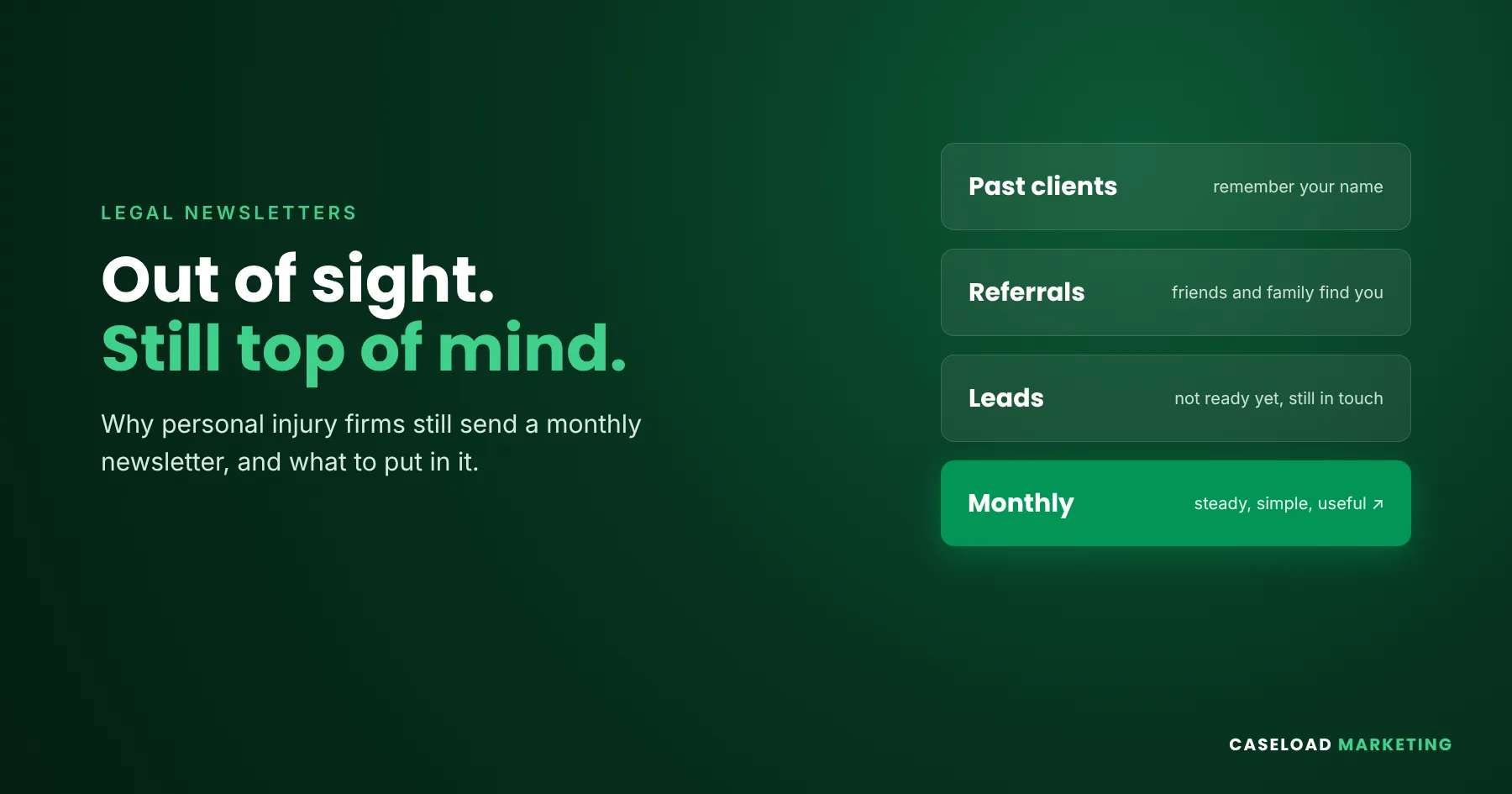
People hurt at work often know co-workers who get hurt too. A monthly newsletter keeps the firm in mind with past clients and contacts, so referrals keep coming. Our guide to email marketing for law firms covers how this works.
Shared lead vendors
Some firms buy workers’ comp leads from vendors. Shared leads are often sold to more than one firm, so speed matters even more. Our article on car accident leads explains the difference between shared and exclusive leads, and the same ideas apply here.
What makes a workers’ comp lead worth calling
A good workers’ comp lead usually has six things in common:
Six signs a workers’ comp lead is worth calling.
Hurt at work. The injury happened on the job or while doing work duties.
Recent. The injury is recent enough that state reporting and filing deadlines are still open.
In the right state. The worker lives or works in a state where the firm handles claims.
Reachable. A working phone number and someone who answers.
Consented. The form asked permission to call or text, and the follow-up matches it.
A clear next step. Intake knows the first questions to ask and can book a consultation on the spot.
Firms that track lead quality by these points can see quickly which campaigns, ads and forms bring in workers they can help.
Reaching injured workers on Facebook and Instagram
Workers’ comp ads have to follow the state bar’s advertising rules and the Meta Advertising Standards. Meta does not allow ads that assert or imply something personal about the viewer, so a line like “Were you hurt at work?” is a common reason for rejection. Ads that describe the service, such as “Workers’ comp claims: talk to a local injury firm”, are easier to approve. Our article on whether lawyers can advertise on Facebook covers these rules in more detail.
Meta’s Instant Forms also do not allow questions about health, so forms should ask for contact details, the type of job, the state and when the injury happened. Many firms also run campaigns in Spanish where their market needs it.
Following up on workers’ comp leads
The first call sets the tone for everything that follows. Injured workers may be nervous about their job, so intake should be quick, calm and clear about next steps. Leads that do not answer right away still deserve follow-up by text and email within the consent the form collected.
Workers who are not ready yet can stay on the firm’s newsletter list. When they or a co-worker need help later, the firm is the name they remember.
In the workers’ comp campaigns we run, plain service-focused ads and short forms tend to bring in the most workers that intake can actually help.
How Caseload Marketing helps firms get workers’ comp leads
Workers’ comp leads are people hurt on the job who want help with a workers’ compensation claim.
Workers’ comp runs through each state’s system, so campaigns should match the states a firm serves.
The best workers’ comp leads are recent, in the right state, reachable and consented.
Facebook and Instagram reach injured workers before they start searching.
Ads should describe the service and never imply the viewer is injured.
Fast, calm intake follow-up and a monthly newsletter keep leads engaged and bring in referrals.
Frequently asked questions
What are workers’ comp leads?
Workers’ comp leads are people who were injured at work and have asked a law firm to contact them about a workers’ compensation claim. They usually come from ads, search, referrals or lead vendors.
How do personal injury firms get workers’ comp leads?
Most firms use a mix of Meta ads on Facebook and Instagram, a helpful website, referrals from past clients and, in some cases, lead vendors. Ads and forms built for this case type tend to bring in better-fit leads than general injury campaigns.
Are workers’ comp leads different from other personal injury leads?
Yes. Workers’ compensation is a state-run, no-fault system, and the claim is usually the main remedy against the employer. Some workers also have a separate injury claim against a third party, such as another driver.
What makes a workers’ comp lead good?
A good lead was hurt at work recently, is in a state the firm serves, can be reached by phone and agreed to be contacted. Intake should be able to book a consultation on the first call.
Can law firms run Facebook ads for workers’ comp cases?
Yes. Ads must follow the state bar’s advertising rules and Meta’s policies. Ads should describe the service rather than suggest the viewer was hurt, and lead forms cannot ask about health.
Should workers’ comp campaigns run in Spanish?
Where a firm’s market has many Spanish-speaking workers, separate Spanish ads and forms often help. The firm’s intake team should be ready to follow up in Spanish too.
Does email marketing help with workers’ comp leads?
Yes. A monthly newsletter keeps the firm in mind with past clients, leads who were not ready yet and their co-workers, which brings in referrals over time.
Last updated: November 11, 2026. This article is general marketing information for law firms, not legal advice.
Book a free account review. We will look at your ad account, creative, intake and tracking, and tell you what we would change, whether or not you work with us.
Truck accident leads are inquiries from people hurt in crashes involving commercial trucks, such as semi-trucks, 18-wheelers and delivery vehicles. They differ from car accident leads because more parties can be involved, federal trucking rules apply, evidence needs to be requested early and injuries are often more serious, so intake needs to move quickly.
The personal injury marketing ideas that suit a busy firm are the ones that keep running without daily attention: Facebook and Instagram lead ads in the firm's service area, retargeting for people who visited but didn't call, a monthly client newsletter, a simple review-request habit and fast intake follow-up on every new inquiry.
What is a legal newsletter? It is a regular email, usually monthly, that a law firm sends to past clients, contacts and people who asked about a case. For personal injury firms, a legal newsletter keeps the firm's name familiar between cases, so when someone is hurt, or a friend or family member is, the firm is the one they remember and call.
What are workers' comp leads? They are people who were hurt on the job and want help with a workers' compensation claim. The workers' comp leads worth calling come from recently injured workers in a state where the firm practices, who can be reached quickly and have agreed to be contacted. Personal injury firms that handle these cases usually reach them through Meta ads on Facebook and Instagram, simple lead forms and fast intake follow-up.
Can lawyers advertise on Facebook? Yes, in every US state, on both Facebook and Instagram. ABA Model Rule 7.2 lets lawyers share information about their services through any media, and a Facebook ad shown to a general audience counts as advertising, not solicitation. The ad still has to be truthful, name a responsible lawyer or firm, follow your state bar's rules and pass Meta's ad review.
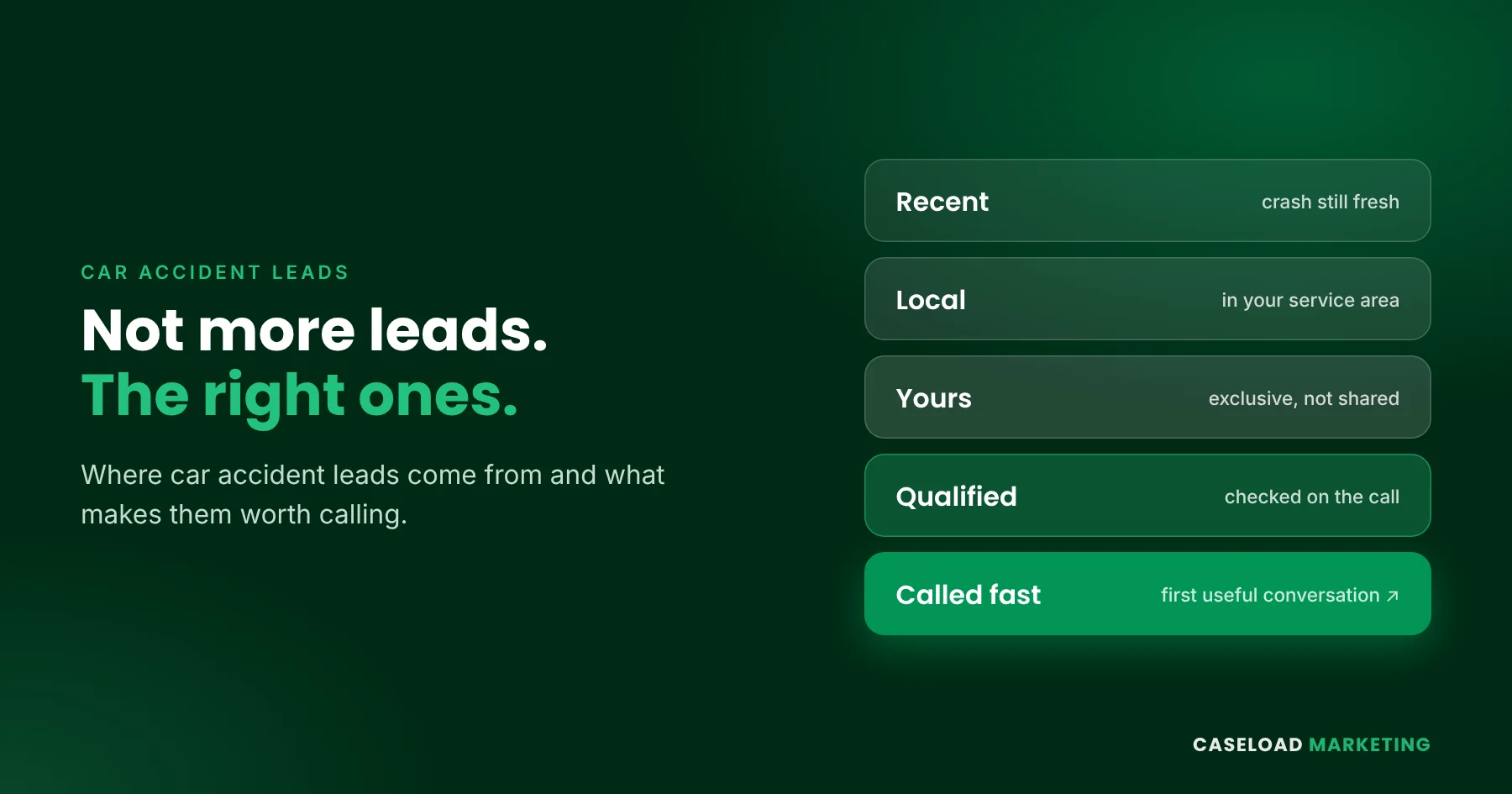
Car accident leads are people who were hurt in a crash and reached out to a law firm, by form, call or message, about a possible claim. They come from ads, search, referrals and lead vendors. The car accident leads worth the most are recent, in the firm’s service area, generated by the firm itself or exclusive to it, and called back quickly by an intake team that knows what to ask.
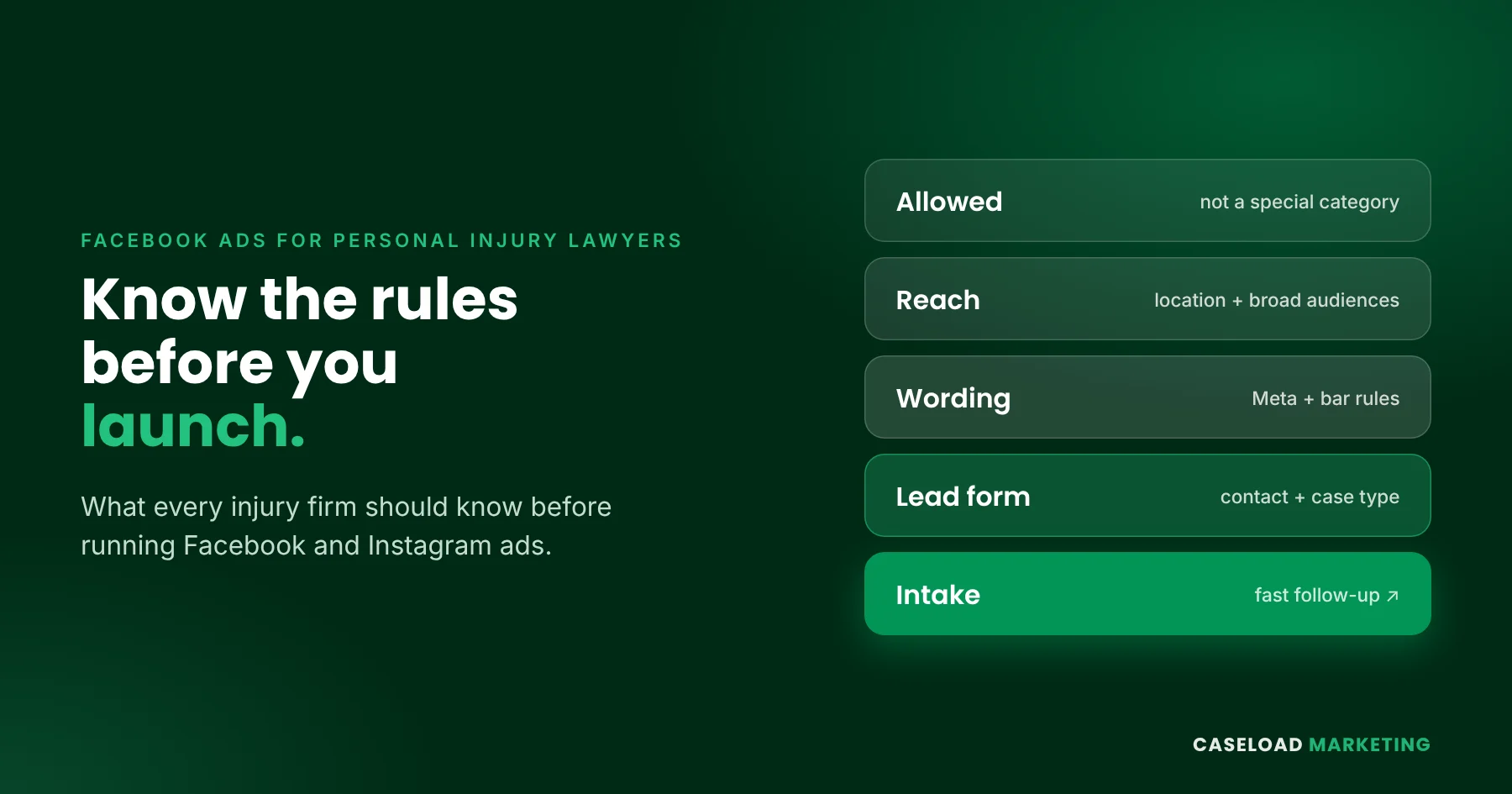
Facebook ads for personal injury lawyers work best when they reach people in the firm’s area before those people start searching, follow both Meta’s ad policies and the state bar’s advertising rules, and send every inquiry to an intake team that answers fast. Location, compliant wording, a simple lead form and quick follow-up matter more than clever creative.
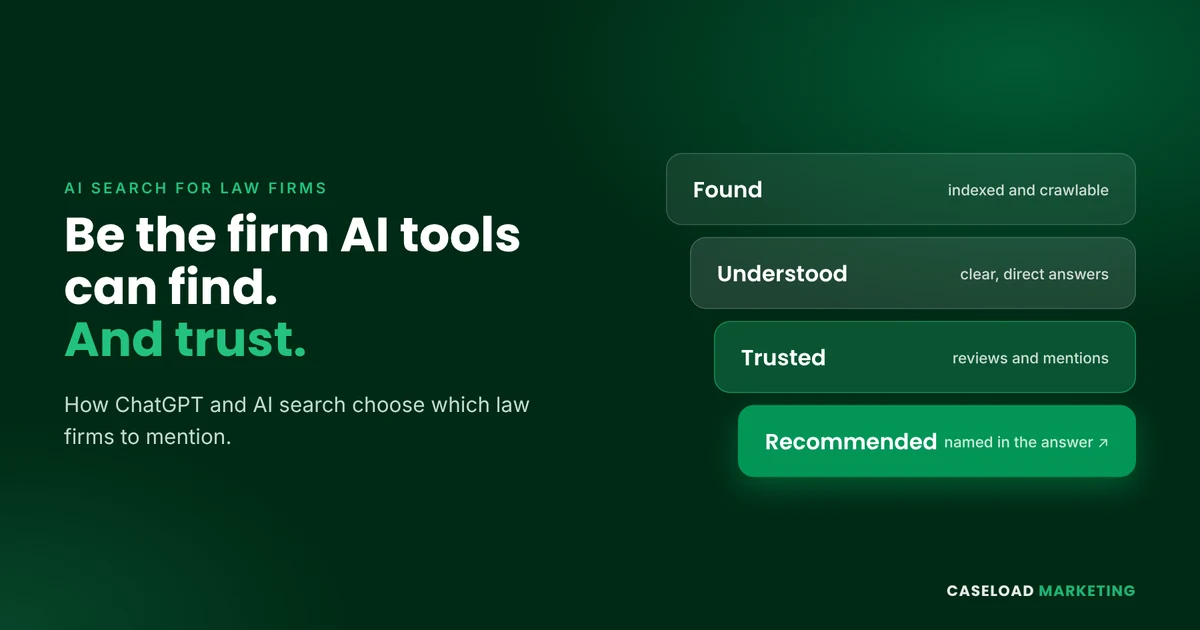
AI search tools like ChatGPT, Google AI Overviews, Gemini, Perplexity and Copilot recommend law firms they can find, understand and trust. They draw on search indexes, the firm’s own website, reviews and mentions across the web. Firms that answer questions clearly, describe themselves the same way everywhere and keep earning real reviews give these tools the most to work with.
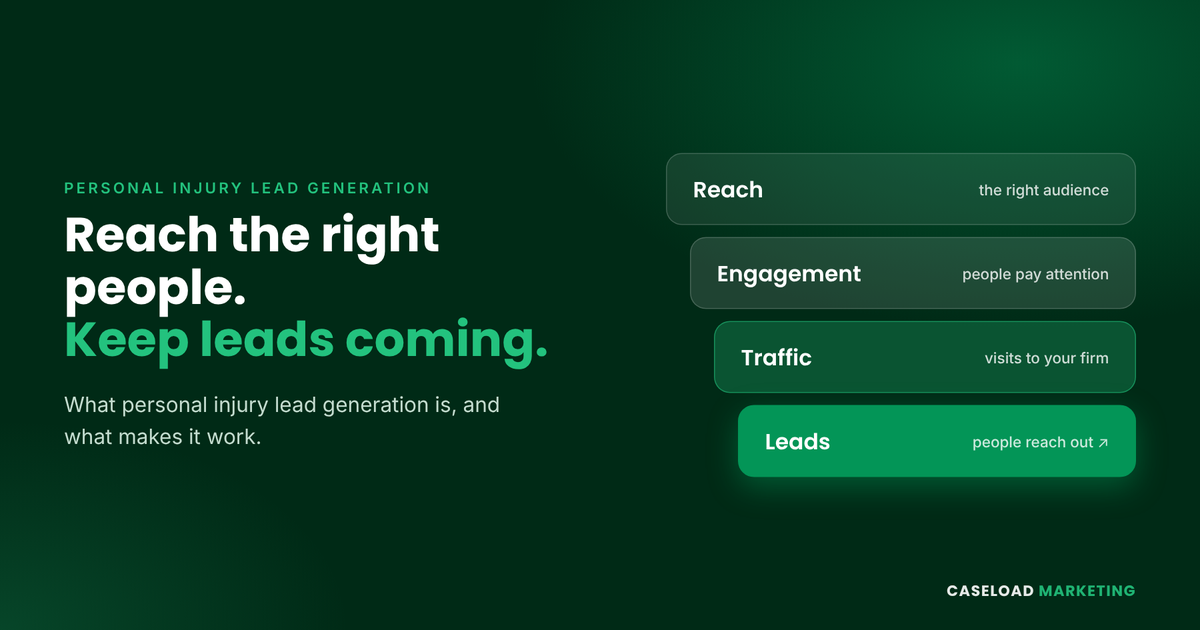
Personal injury lead generation is how a law firm reaches people hurt in an accident and gives them an easy way to get in touch. The strongest programs combine broad reach, messages that speak to specific case types, and a steady month-after-month presence so new leads keep coming in.
Our Clients
We partner exclusively with one firm per market to ensure a competitive edge in the highly competitive field of personal injury lawyer advertising, avoiding competition among our clients.
Due to the sensitive nature of our work, we maintain confidentiality in our partnerships. Our impressive client retention rate of 90% over a 12-month period underscores our commitment to client satisfaction and success. If you're interested in exploring our availability in your market, please contact us.
Need a boost in marketing your law firm? We've got you covered!
Let's discuss how we can elevate your strategy. Explore our services or get in touch—let's ensure your firm stands out!