Facebook Ads for Personal Injury Lawyers: What Every Firm Should Know First
Caseload MarketingOctober 30, 2026
Author: Caseload Marketing
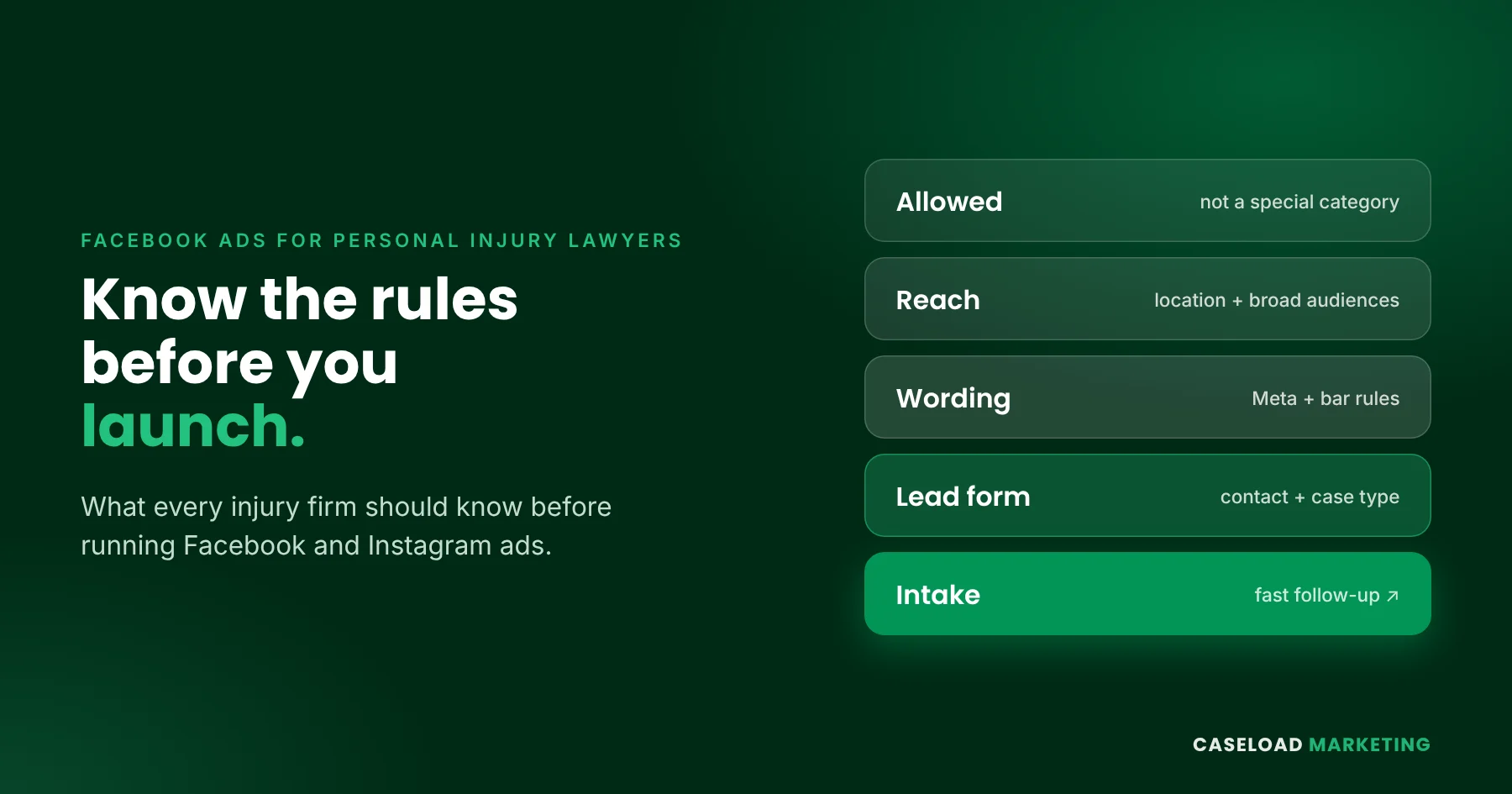
Facebook ads for personal injury lawyers work best when they reach people in the firm’s area before those people start searching, follow both Meta’s ad policies and the state bar’s advertising rules, and send every inquiry to an intake team that answers fast. Location, compliant wording, a simple lead form and quick follow-up matter more than clever creative.
Most people do not plan to need an injury lawyer. A crash, a fall at work or a dog bite happens, and the first few days are spent on doctors, insurance calls and car repairs. Facebook and Instagram reach people during those days, often before they type anything into a search bar.
That is why so many personal injury firms now run Facebook ads for law firms on Meta. It is also why the details matter: Meta limits what an ad can say about the person seeing it, state bars regulate attorney advertising, and a lead is only worth something if someone at the firm follows up.
This guide to Facebook ads for personal injury lawyers covers what every firm should know before it launches: what is allowed, how the ads reach people, how to word them, where leads should land and how to measure results. It is general marketing information, not legal advice.
Can personal injury lawyers advertise on Facebook?
Yes. Law firms can run ads on Facebook and Instagram, and legal services are not one of Meta’s Special Ad Categories. Those categories cover housing, employment, financial products and services, and ads about social issues, elections or politics, and they come with extra audience limits. An injury firm’s ads do not fall into them by default.
Two sets of rules still apply to every ad: Meta’s Advertising Standards, which every advertiser must follow, and your state bar’s rules on lawyer advertising. A campaign that ignores either one tends to get ads rejected or create risk for the firm.
How do Facebook ads reach people who need an injury lawyer?
Meta does not let a firm target “people who were just in an accident.” Instead, firms reach people by location and broad audiences, and Meta’s delivery system shows the ads to people most likely to respond. The firm’s job is to give that system the right signals.
Location. Choose the counties, cities or radius your firm actually serves, so every lead is someone you can help.
Broad audiences. Adults in your area are usually the starting point. Narrow interest targeting tends to matter less than clear creative and good conversion data.
Custom audiences. People who visited your website, watched your videos or opened your lead form can be shown follow-up ads, since they already know your name.
One case type per campaign. A truck crash, a workplace injury and a slip and fall reach different people and need different messages. Separating them makes results easier to read.
What do Meta’s ad policies mean for personal injury ads?
Meta’s personal attributes policy is the rule injury firms run into most. Ads cannot assert or imply personal attributes of the person seeing them, and physical health, including medical conditions, is on that list. Meta also does not allow ads that ask questions about those attributes. You can still use “you” and “your”, as long as the ad does not say or suggest that the viewer is injured.
Likely to be rejected
Try instead
“Were you injured in a car accident?”
“Car accident cases: talk to a local injury lawyer about your options.”
“Is your back pain from a crash ruining your life?”
“What to do in the first week after a car accident.”
“Hurt at work? You deserve compensation.”
“Workplace injury claims explained in plain English.”
Wording that implies the viewer is injured often gets ads rejected. Focus on the service instead.
Lead forms have their own limits. Meta’s rules for Instant Forms do not allow questions that ask for health information, such as current or past injuries or medical treatment, or for insurance information, such as the person’s insurance company or policy details. Those questions belong in the intake call, not the ad form. Every lead form also needs a link to the firm’s privacy policy.
Which state bar rules apply to Facebook ads?
A Facebook ad is attorney advertising, so your state’s version of the lawyer advertising rules applies to the ad, the lead form and the page it links to. Most states base their rules on the ABA Model Rules, but the details differ, so check your own state’s rules or ask your bar’s ethics counsel.
No false or misleading claims. Under ABA Model Rule 7.1, statements about results, experience and fees must not mislead. Many states also limit testimonials, past results and words like “expert” or “specialist”.
Name the responsible lawyer or firm.ABA Model Rule 7.2(d) says advertising must include the name and contact information of at least one lawyer or law firm responsible for its content.
Ads are not live solicitation. ABA Model Rule 7.3 restricts live person-to-person solicitation. A public ad is generally treated differently, but follow-up calls and texts to people who reach out should still respect state rules and consent.
Filing or review. Some states require certain ads to be filed with or reviewed by the bar. Build that time into your launch plan.
Everything in this section is general information, not legal advice.
Should leads go to a lead form or a landing page?
Both can work, and many firms test both.
Instant Forms (lead ads) open inside Facebook or Instagram with the person’s contact details filled in, which makes them quick to complete. You can add custom questions, up to 15 in total, use conditional logic and include an appointment request.
A landing page on your website gives you more room to explain the case type, show the responsible lawyer, and add reviews. It also builds the website data that helps your ads and your search presence.
Whichever you choose, keep the questions short and focused on what intake needs to call the person back: name, phone, email, the type of case and the general location. Leave the details of the injury for the conversation.
From the ad to the intake call: five steps every firm should plan.
What should happen after someone submits a lead?
This is where most of the value is won or lost. Someone who fills in a form after a crash is often talking to more than one firm, so the first useful conversation matters.
Send every lead straight to the people who will call it, through your CRM, an automation tool such as Zapier, or both.
Call quickly, and keep calling at different times of day if the first attempt is missed.
Text or call only with the consent your form collects, and honor opt-outs right away.
Track what happens to each lead: reached, consultation booked, not a fit. Those notes show which ads bring the right people.
In the accounts we manage, the campaigns that hold up over time are the ones where intake answers fast and reports back on lead quality. That feedback shapes the next round of ads more than any targeting change.
How should a firm measure Facebook ads for personal injury lawyers?
Look at results in layers rather than one number. Reach and impressions show how many people saw the ads. Engagement and clicks show whether the message landed. Leads show how many people raised their hand. Intake outcomes show which of those leads were the cases the firm wants.
Install the Meta Pixel and the Conversions API so form submissions and page visits are recorded accurately.
Review weekly, decide monthly. Short-term swings are normal, so look for patterns before changing campaigns.
Check the Meta Ad Library.All active ads on Meta are public there, so you can see what other firms in your market are running.
Seven things to check before launch.
Where do Facebook ads fit with other channels?
Facebook ads for personal injury lawyers reach people before they search. Other channels cover the rest of the journey: a clear website and search presence for people comparing firms, email marketing for law firms to stay in touch with past clients and referral sources, and, in states that allow it, personal injury direct mail. Firms that use more than one channel are less exposed when one of them has a slow month.
How Caseload Marketing runs Facebook ads for injury firms
Caseload Marketing runs Facebook ads for lawyers and email marketing for personal injury firms nationwide. We build campaigns by case type, write ads around Meta’s policies and each state’s advertising rules, and send leads straight to the firm’s intake team. Learn more about our law firm marketing, read our guide to personal injury leads, or see how firms get recommended by AI search.
Key takeaways
Personal injury firms can advertise on Facebook and Instagram; legal services are not a Special Ad Category.
Ads cannot say or suggest that the viewer is injured. Focus on the service, not the person’s situation.
Lead forms cannot ask for health or insurance details. Save those for the intake call.
State bar rules apply to the ad, the form and the landing page.
With Facebook ads for personal injury lawyers, fast follow-up and intake feedback matter more than any single targeting setting.
Measure in layers, from reach to intake outcomes.
Frequently asked questions
Are Facebook ads allowed for personal injury lawyers?
Yes. Law firms can advertise on Facebook and Instagram. Legal services are not a Meta Special Ad Category, but every ad must follow Meta’s Advertising Standards and the advertising rules of the firm’s state bar.
Why do personal injury ads get rejected on Facebook?
The most common reason is wording that asserts or implies a personal attribute of the viewer, such as an injury or medical condition. Phrases like “Were you injured?” often trigger Meta’s personal attributes policy. Describing the firm’s service instead usually avoids it.
Can a lead form ask about the person’s injuries?
No. Meta does not allow Instant Form questions that ask for health information, such as current or past injuries or medical treatment, or for insurance details. Ask for contact details and the case type, and cover the rest on the intake call.
Can Facebook target people who were recently in an accident?
No. Meta does not offer targeting based on accidents or injuries. Firms reach people by location and broad audiences, and use custom audiences to follow up with people who already visited the website or engaged with the firm’s ads.
Do bar advertising rules apply to Facebook ads?
Yes. A Facebook ad is attorney advertising. Rules on misleading claims, testimonials, the responsible lawyer’s name and, in some states, filing or review all apply. This is general information, not legal advice.
Should a firm use lead forms or a landing page?
Both can work. Instant Forms are quick to complete because contact details are prefilled. A landing page gives more room to explain the case type and builds data on your own website. Many firms test both.
How long do Facebook ads take to work?
There is no fixed timeline. New campaigns need time to collect enough data, and results swing from week to week. Most firms judge campaigns over months, based on lead quality reported by intake as well as lead volume.
Can we see what other law firms are running?
Yes. The Meta Ad Library shows all active ads running across Facebook and Instagram, and anyone can search it by page name or keyword.
Last updated: October 30, 2026. This article is general marketing information for law firms, not legal advice.
Book a free account review. We will look at your ad account, creative, intake and tracking, and tell you what we would change, whether or not you work with us.
Truck accident leads are inquiries from people hurt in crashes involving commercial trucks, such as semi-trucks, 18-wheelers and delivery vehicles. They differ from car accident leads because more parties can be involved, federal trucking rules apply, evidence needs to be requested early and injuries are often more serious, so intake needs to move quickly.
The personal injury marketing ideas that suit a busy firm are the ones that keep running without daily attention: Facebook and Instagram lead ads in the firm's service area, retargeting for people who visited but didn't call, a monthly client newsletter, a simple review-request habit and fast intake follow-up on every new inquiry.
What is a legal newsletter? It is a regular email, usually monthly, that a law firm sends to past clients, contacts and people who asked about a case. For personal injury firms, a legal newsletter keeps the firm's name familiar between cases, so when someone is hurt, or a friend or family member is, the firm is the one they remember and call.
What are workers' comp leads? They are people who were hurt on the job and want help with a workers' compensation claim. The workers' comp leads worth calling come from recently injured workers in a state where the firm practices, who can be reached quickly and have agreed to be contacted. Personal injury firms that handle these cases usually reach them through Meta ads on Facebook and Instagram, simple lead forms and fast intake follow-up.
Can lawyers advertise on Facebook? Yes, in every US state, on both Facebook and Instagram. ABA Model Rule 7.2 lets lawyers share information about their services through any media, and a Facebook ad shown to a general audience counts as advertising, not solicitation. The ad still has to be truthful, name a responsible lawyer or firm, follow your state bar's rules and pass Meta's ad review.
Car accident leads are people who were hurt in a crash and reached out to a law firm, by form, call or message, about a possible claim. They come from ads, search, referrals and lead vendors. The car accident leads worth the most are recent, in the firm’s service area, generated by the firm itself or exclusive to it, and called back quickly by an intake team that knows what to ask.
Facebook ads for personal injury lawyers work best when they reach people in the firm’s area before those people start searching, follow both Meta’s ad policies and the state bar’s advertising rules, and send every inquiry to an intake team that answers fast. Location, compliant wording, a simple lead form and quick follow-up matter more than clever creative.
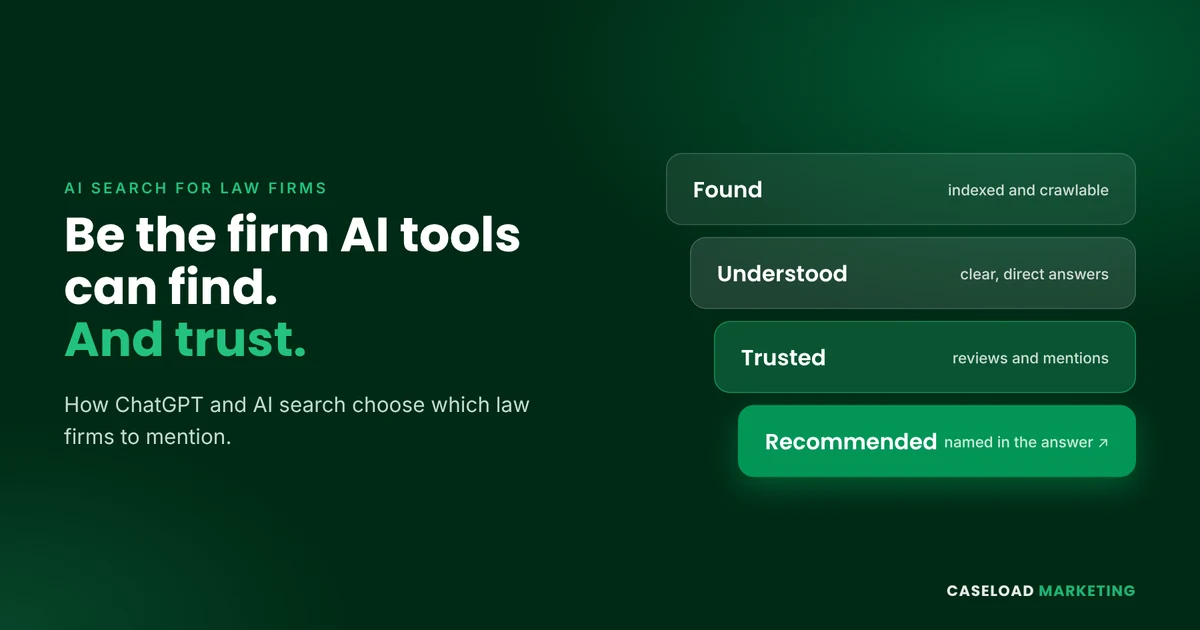
AI search tools like ChatGPT, Google AI Overviews, Gemini, Perplexity and Copilot recommend law firms they can find, understand and trust. They draw on search indexes, the firm’s own website, reviews and mentions across the web. Firms that answer questions clearly, describe themselves the same way everywhere and keep earning real reviews give these tools the most to work with.
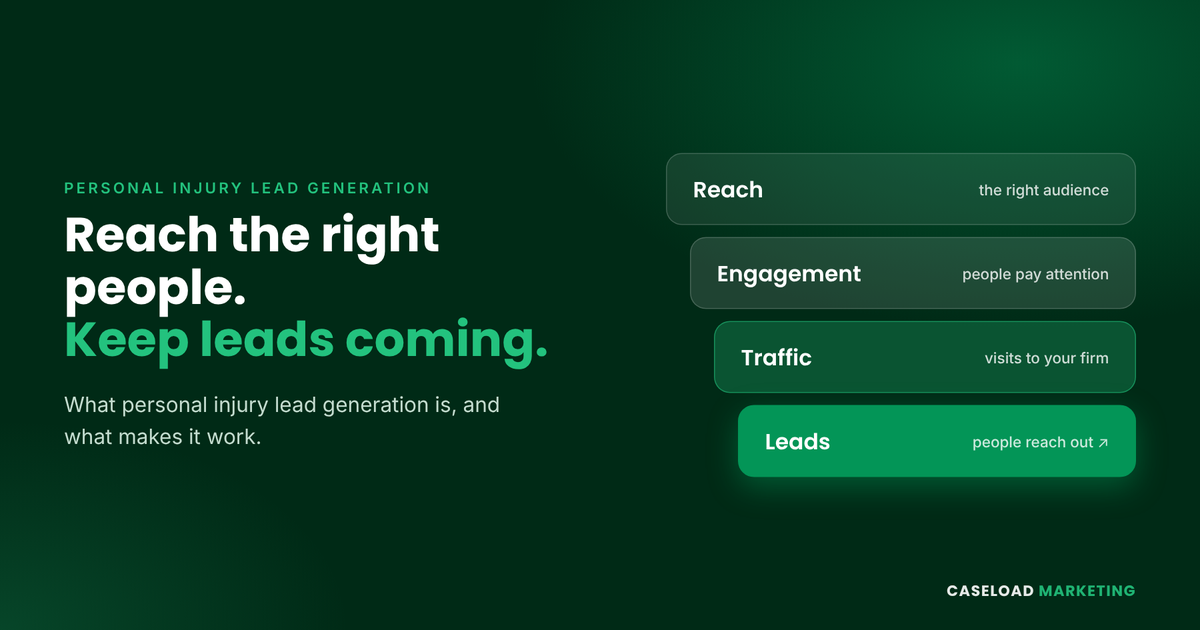
Personal injury lead generation is how a law firm reaches people hurt in an accident and gives them an easy way to get in touch. The strongest programs combine broad reach, messages that speak to specific case types, and a steady month-after-month presence so new leads keep coming in.
Our Clients
We partner exclusively with one firm per market to ensure a competitive edge in the highly competitive field of personal injury lawyer advertising, avoiding competition among our clients.
Due to the sensitive nature of our work, we maintain confidentiality in our partnerships. Our impressive client retention rate of 90% over a 12-month period underscores our commitment to client satisfaction and success. If you're interested in exploring our availability in your market, please contact us.
Need a boost in marketing your law firm? We've got you covered!
Let's discuss how we can elevate your strategy. Explore our services or get in touch—let's ensure your firm stands out!