Exclusive vs Shared Personal Injury Leads: What the Difference Means
Caseload MarketingNovember 19, 2026
Author: Caseload Marketing
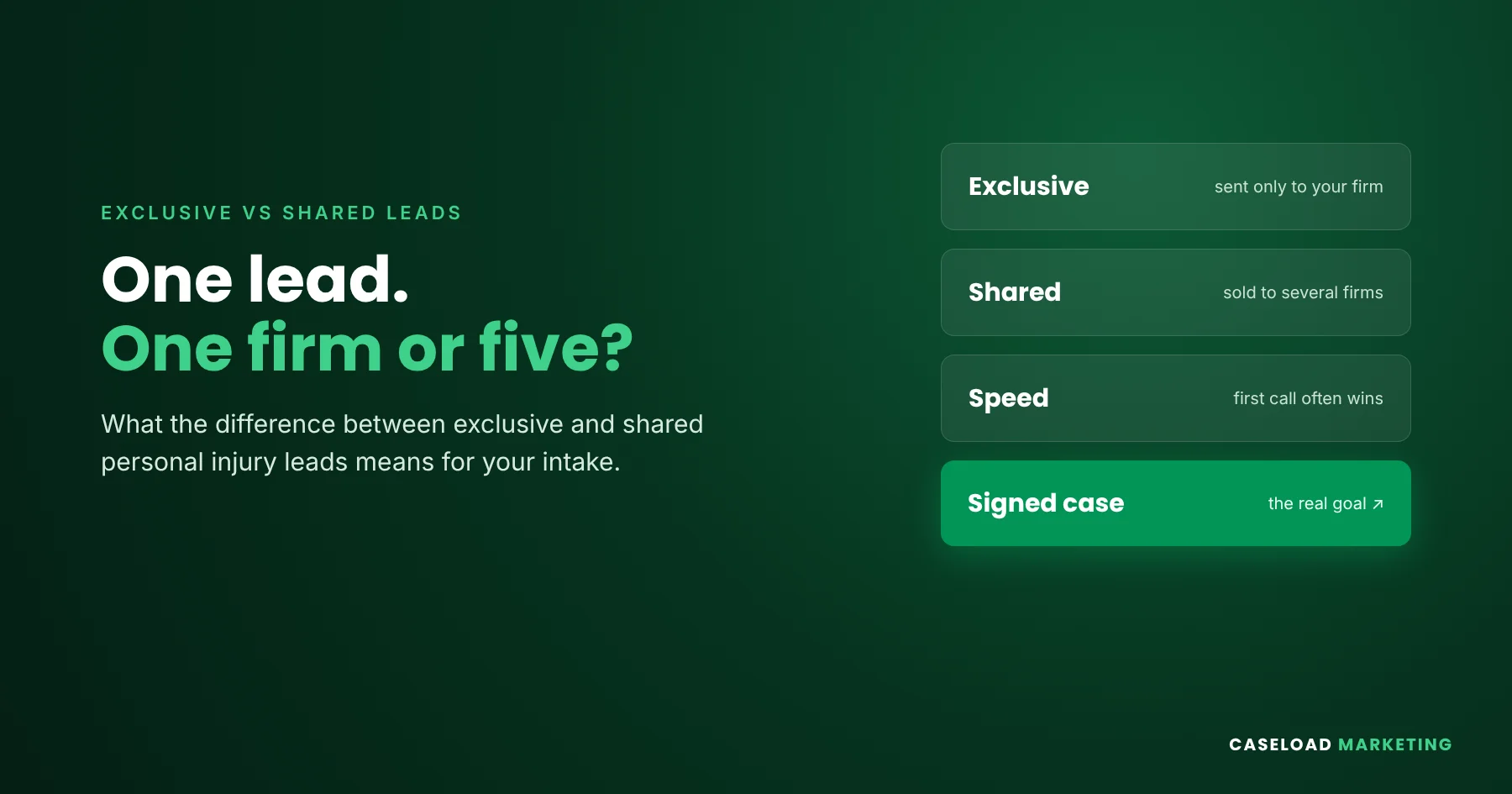
Exclusive vs shared personal injury leads comes down to who else gets the same inquiry. Exclusive leads are sent to only one law firm, while shared leads are sold to several firms at the same time. With an exclusive lead, only your intake team contacts the person. With a shared lead, the same person may hear from several firms within minutes, so speed and follow-up decide who signs the case.
When personal injury firms compare lead sources, the first question is usually how many leads they will get. A more useful question is how many of those leads are only theirs, and how many become signed cases. This guide explains exclusive and shared leads, the difference between a lead and a signed case, and what to ask before choosing a lead source, so you can weigh exclusive vs shared personal injury leads for your own firm.
It is general marketing information for law firms, not legal advice.
How exclusive and shared personal injury leads compare.
What are exclusive personal injury leads?
An exclusive lead is a person who asked one firm for help, and that firm is the only one that receives their details. Most exclusive leads come from a firm’s own marketing: its Facebook and Instagram lead ads, its website forms, its phone line and its referrals. Because the person reached out to that firm, they usually remember its name when intake calls.
What are shared personal injury leads?
A shared lead is sold by a lead vendor to more than one law firm. The person fills out a general form, often on a site that is not tied to any one firm, and their details go to several firms in the same area. Each firm then races to call first.
Exclusive vs shared personal injury leads: what is the difference?
Who contacts the person. Exclusive: only your firm. Shared: several firms.
Brand recognition. Exclusive leads asked your firm by name. Shared leads may not know which firm is calling.
Speed pressure. Both need fast follow-up, but shared leads turn into a race between firms.
Control. With exclusive leads, the firm controls the ads, the form questions and the service area. With shared leads, the vendor decides.
Setup. Exclusive leads need the firm’s own campaigns and intake. Shared leads are ready-made but compete with other buyers.
What is the difference between a lead and a signed case?
A lead is a person who contacts the firm or fills out a form. A signed case is a lead who has been reached, qualified and has signed with the firm. Between the two sit the steps where most marketing results are won or lost: reaching the person quickly, confirming the case fits what the firm handles and building enough trust for them to sign.
The steps between a lead and a signed case.
Tracking both numbers matters. A source that sends many leads but few signed cases may cost the firm more time than a source with fewer, better leads. Our guide to personal injury lead generation covers intake in more detail.
Are exclusive personal injury leads better than shared leads?
For many personal injury firms, exclusive leads are easier to turn into signed cases because the person already chose to contact that firm. Shared leads can still work for firms with very fast intake teams, but they come with more competition on every lead. Many firms build their own exclusive lead flow first and use shared leads only to fill gaps. When weighing exclusive vs shared personal injury leads, compare signed cases, not just lead counts.
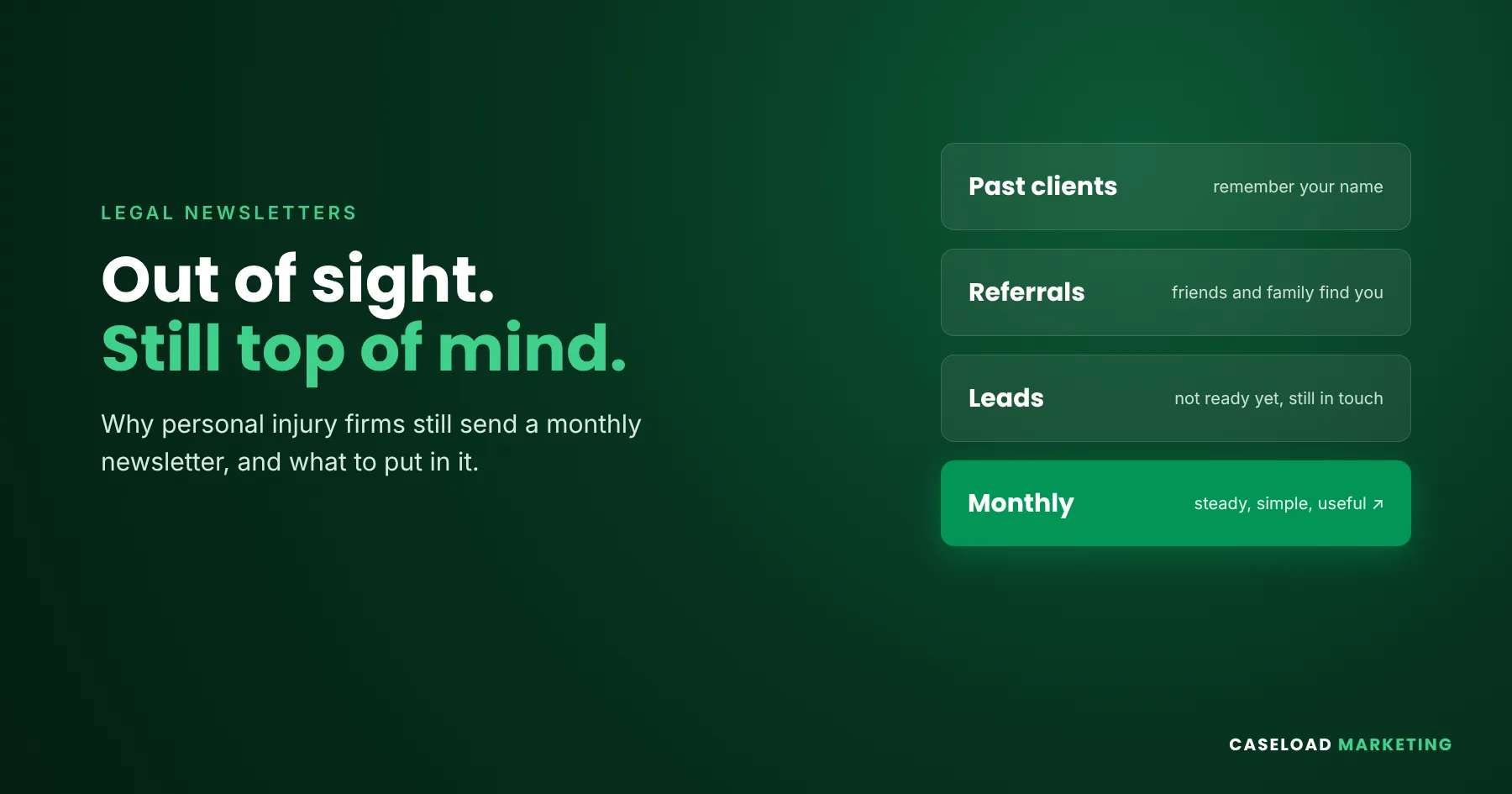
Referrals and past clients. A monthly legal newsletter keeps past clients sending friends and family.
What should a firm ask a lead vendor?
Is each lead sent only to my firm, or to other firms too?
Where do the leads come from, and what does the form say?
Which areas and case types do the leads cover?
How fast are leads delivered after the person submits?
Does the vendor recommend a specific lawyer to the person?
That last question matters. The comment to ABA Model Rule 7.2 says lawyers may pay others to generate client leads, as long as the lead generator does not recommend the lawyer and the arrangement follows the other professional conduct rules. Check your own state bar’s rules before buying leads.
In the injury accounts we manage, firms that move from bought leads to their own Meta lead campaigns usually find intake calls are easier because the person already knows the firm’s name.
How Caseload Marketing helps firms build exclusive leads
Exclusive vs shared personal injury leads: exclusive leads go to one firm; shared leads are sold to several firms.
A lead becomes a signed case only after it is reached, qualified and signed.
Exclusive leads usually know the firm’s name, which makes intake calls easier.
Shared leads turn every inquiry into a speed race between firms.
Firms build exclusive leads through their own ads, retargeting, case-type campaigns and referrals.
Ask lead vendors who else receives each lead, and check the ABA comment and your state bar’s rules.
Frequently asked questions
What is an exclusive personal injury lead?
An exclusive personal injury lead is a person whose details go to only one law firm. Most come from the firm’s own ads, website forms, phone line and referrals.
What is a shared personal injury lead?
A shared lead is sold by a lead vendor to several law firms at once. The same person may get calls from more than one firm within minutes.
Are exclusive leads better than shared leads?
For many personal injury firms, yes, because the person already chose to contact that firm. Shared leads can work for firms with very fast intake, but every lead faces competition.
What is the difference between a lead and a signed case?
A lead is a person who contacts the firm or fills out a form. A signed case is a lead who has been reached, qualified and has signed with the firm.
How do I get exclusive personal injury leads?
Run your own lead ads in your service area, retarget website visitors, build campaigns for each case type and keep past clients engaged with a newsletter so they send referrals.
Can lawyers pay for leads?
Under the comment to ABA Model Rule 7.2, lawyers may pay others to generate client leads as long as the lead generator does not recommend the lawyer and the arrangement follows the other rules. State rules vary, so check your state bar.
Why do shared leads need such fast follow-up?
Because several firms receive the same lead, the person often signs with the first firm that reaches them and earns their trust.
What should I ask a lead vendor?
Ask whether each lead is sent only to your firm, where leads come from, which areas and case types they cover, how fast they arrive and whether the vendor recommends a specific lawyer.
Does Caseload Marketing sell shared leads?
No. Caseload Marketing runs campaigns for each firm, and every lead goes only to the firm that runs the campaign.
Last updated: November 19, 2026. This article is general marketing information for law firms, not legal advice.
Book a free account review. We will look at your ad account, creative, intake and tracking, and tell you what we would change, whether or not you work with us.
Exclusive vs shared personal injury leads comes down to who else gets the same inquiry. Exclusive leads are sent to only one law firm, while shared leads are sold to several firms at the same time. With an exclusive lead, only your intake team contacts the person. With a shared lead, the same person may hear from several firms within minutes, so speed and follow-up decide who signs the case.
Truck accident leads are inquiries from people hurt in crashes involving commercial trucks, such as semi-trucks, 18-wheelers and delivery vehicles. They differ from car accident leads because more parties can be involved, federal trucking rules apply, evidence needs to be requested early and injuries are often more serious, so intake needs to move quickly.
The personal injury marketing ideas that suit a busy firm are the ones that keep running without daily attention: Facebook and Instagram lead ads in the firm's service area, retargeting for people who visited but didn't call, a monthly client newsletter, a simple review-request habit and fast intake follow-up on every new inquiry.
What is a legal newsletter? It is a regular email, usually monthly, that a law firm sends to past clients, contacts and people who asked about a case. For personal injury firms, a legal newsletter keeps the firm's name familiar between cases, so when someone is hurt, or a friend or family member is, the firm is the one they remember and call.
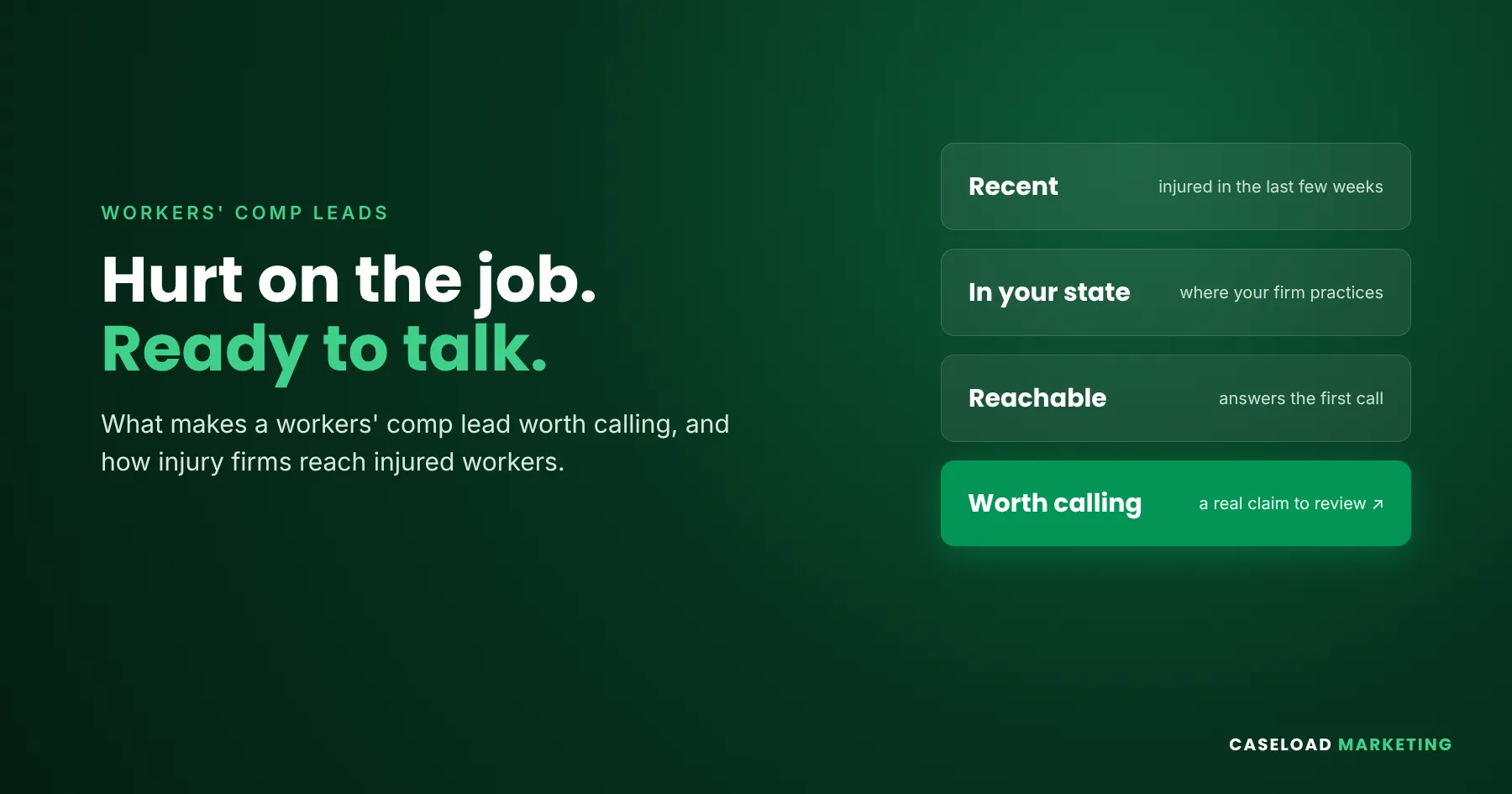
What are workers' comp leads? They are people who were hurt on the job and want help with a workers' compensation claim. The workers' comp leads worth calling come from recently injured workers in a state where the firm practices, who can be reached quickly and have agreed to be contacted. Personal injury firms that handle these cases usually reach them through Meta ads on Facebook and Instagram, simple lead forms and fast intake follow-up.
Can lawyers advertise on Facebook? Yes, in every US state, on both Facebook and Instagram. ABA Model Rule 7.2 lets lawyers share information about their services through any media, and a Facebook ad shown to a general audience counts as advertising, not solicitation. The ad still has to be truthful, name a responsible lawyer or firm, follow your state bar's rules and pass Meta's ad review.
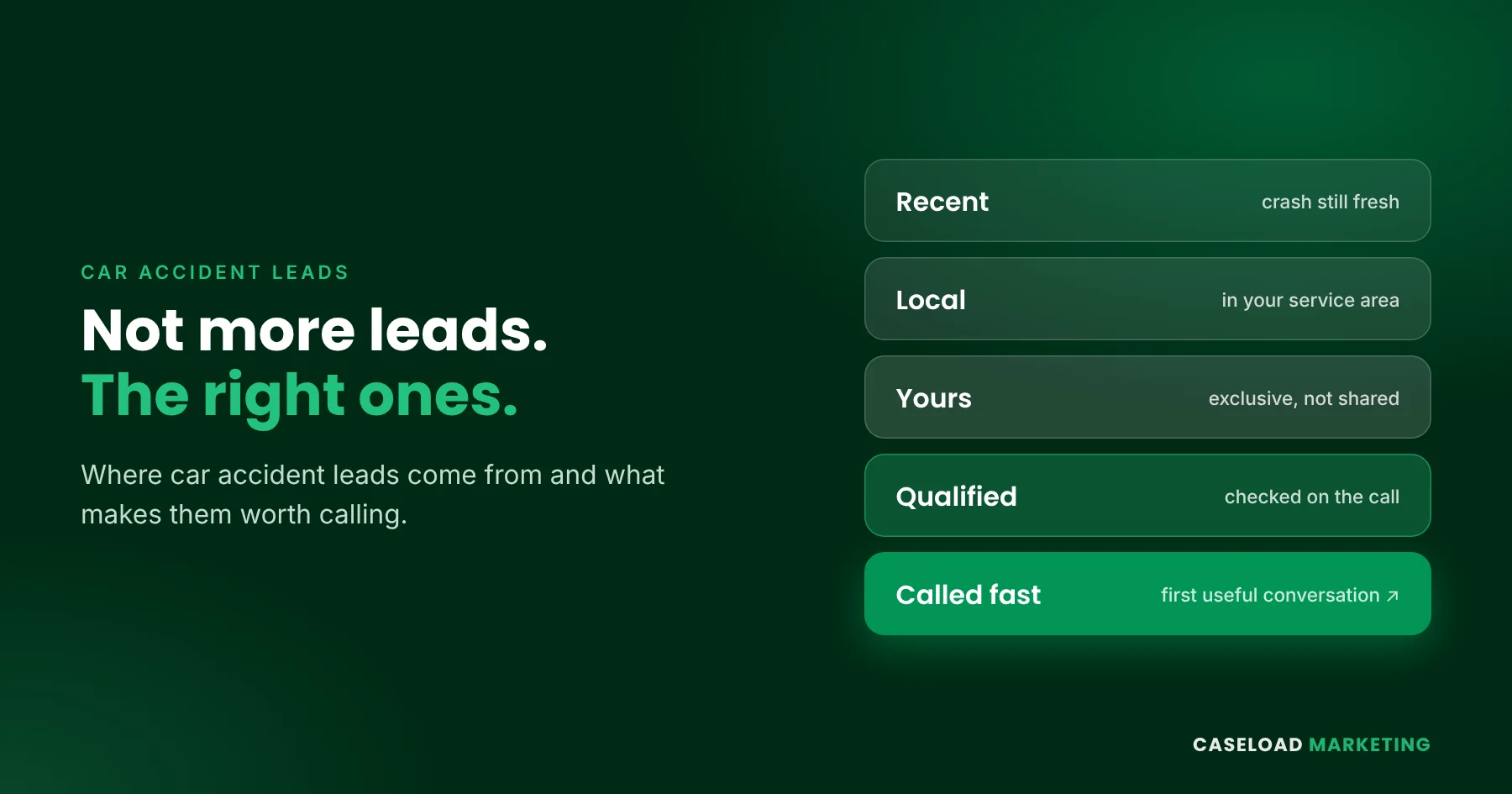
Car accident leads are people who were hurt in a crash and reached out to a law firm, by form, call or message, about a possible claim. They come from ads, search, referrals and lead vendors. The car accident leads worth the most are recent, in the firm’s service area, generated by the firm itself or exclusive to it, and called back quickly by an intake team that knows what to ask.
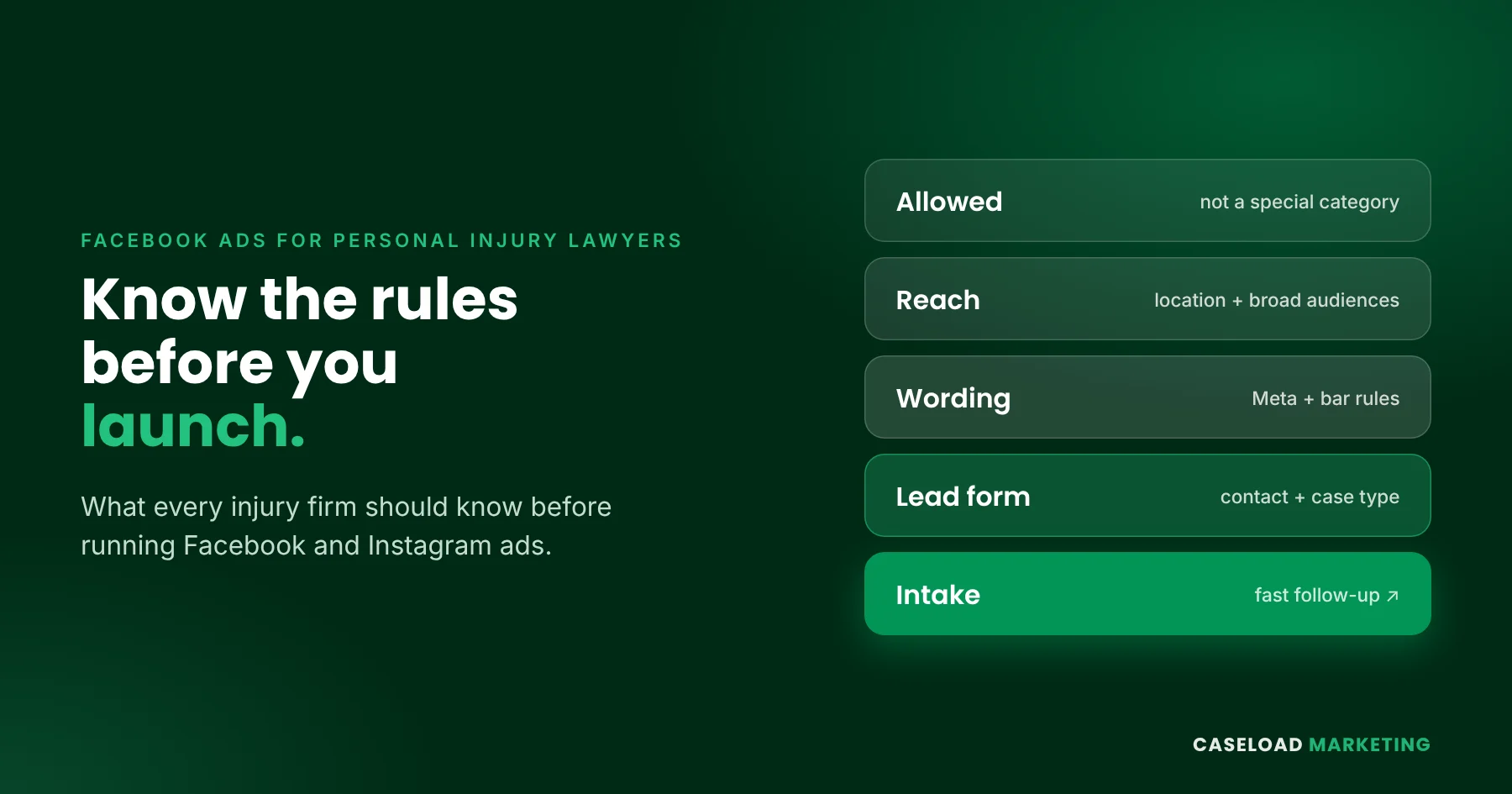
Facebook ads for personal injury lawyers work best when they reach people in the firm’s area before those people start searching, follow both Meta’s ad policies and the state bar’s advertising rules, and send every inquiry to an intake team that answers fast. Location, compliant wording, a simple lead form and quick follow-up matter more than clever creative.
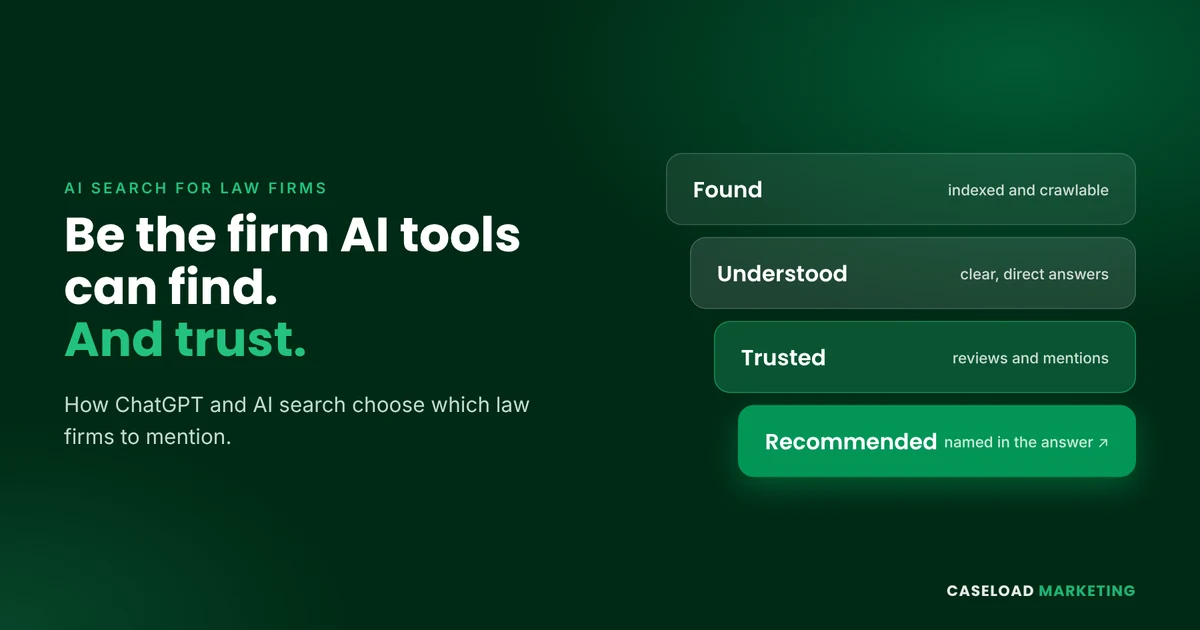
AI search tools like ChatGPT, Google AI Overviews, Gemini, Perplexity and Copilot recommend law firms they can find, understand and trust. They draw on search indexes, the firm’s own website, reviews and mentions across the web. Firms that answer questions clearly, describe themselves the same way everywhere and keep earning real reviews give these tools the most to work with.
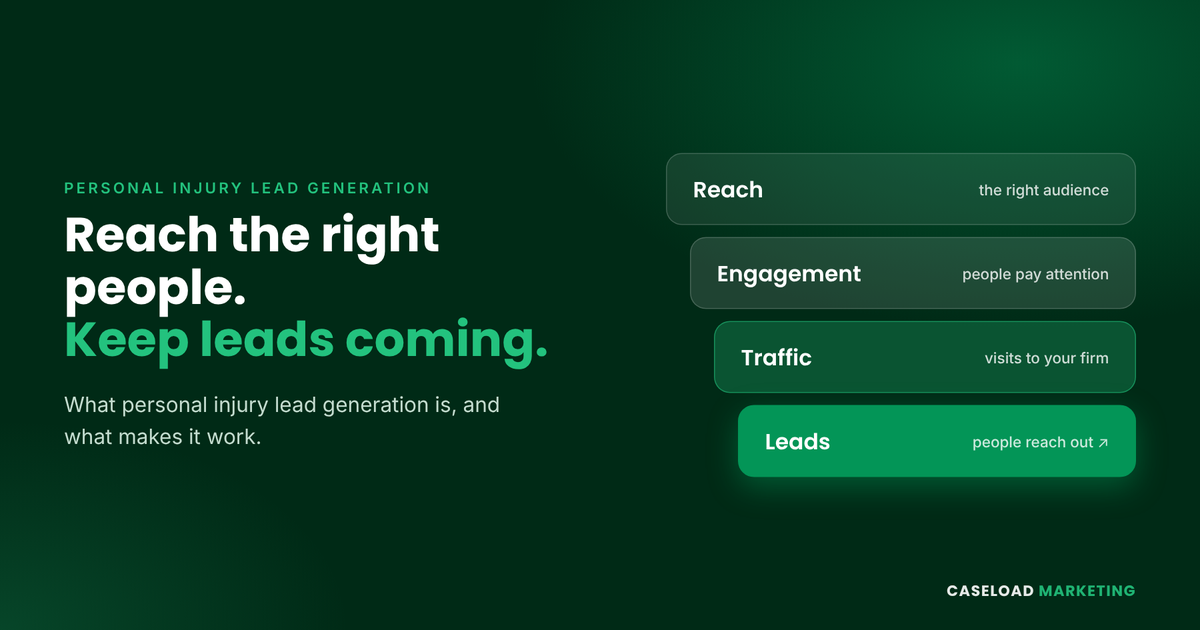
Personal injury lead generation is how a law firm reaches people hurt in an accident and gives them an easy way to get in touch. The strongest programs combine broad reach, messages that speak to specific case types, and a steady month-after-month presence so new leads keep coming in.
Our Clients
We partner exclusively with one firm per market to ensure a competitive edge in the highly competitive field of personal injury lawyer advertising, avoiding competition among our clients.
Due to the sensitive nature of our work, we maintain confidentiality in our partnerships. Our impressive client retention rate of 90% over a 12-month period underscores our commitment to client satisfaction and success. If you're interested in exploring our availability in your market, please contact us.
Need a boost in marketing your law firm? We've got you covered!
Let's discuss how we can elevate your strategy. Explore our services or get in touch—let's ensure your firm stands out!