Personal Injury Marketing Plan: 5 Steps to Build One Your Firm Can Keep
Caseload MarketingNovember 20, 2026
Author: Caseload Marketing
A personal injury marketing plan is a simple written plan that sets which cases a firm wants more of, where it will find them, how fast it will follow up and how it will measure what works. The best plans are short enough to review every month: clear goals, a few reliable channels, fast intake, tracking by lead source and a monthly check.
Many injury firms market in bursts. Ads go up when the caseload drops, then stop when the team gets busy. A personal injury marketing plan replaces those bursts with a steady routine that keeps new inquiries coming in all year. This guide walks through five steps to build one, what to include and how to keep it current.
It is general marketing information for law firms, not legal advice.
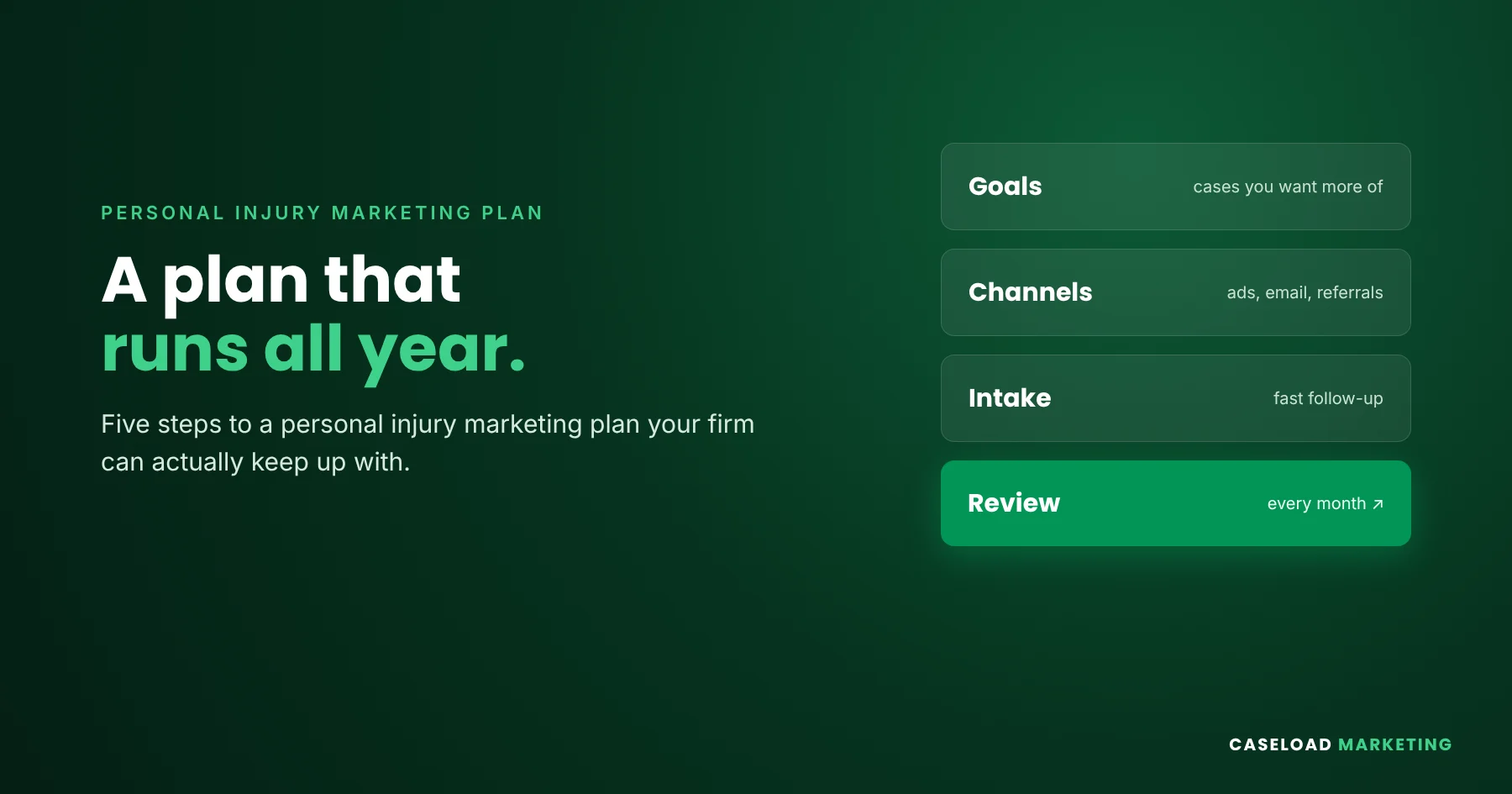
Five steps to a personal injury marketing plan.
What is a personal injury marketing plan?
A personal injury marketing plan is the firm’s answer to five questions: which case types and areas it wants to grow, how new inquiries are handled, which channels bring people in, how results are tracked and when the plan is reviewed. It does not need to be long. One or two pages that the partners and the intake team both understand is usually enough.
Step 1: Set goals by case type and service area
Start with the cases the firm wants more of. Car accidents, truck crashes, workplace injuries and wrongful death cases each attract different people and need different messages. Write down the case types to grow, the counties or cities the firm actually serves, and any language the firm can handle at intake, such as Spanish.
Clear goals keep the rest of the plan focused. A firm that wants more truck accident cases in two counties needs a different plan from one that wants statewide car accident volume.
Step 2: Fix intake before adding more marketing
Marketing brings inquiries in. Intake decides how many become clients. Before spending more on ads, check how quickly new leads are called, how many attempts are made before a lead is marked unreachable and who answers after hours. A personal injury marketing plan that skips intake usually wastes part of its budget.
Call new inquiries as soon as they arrive during business hours.
Send an automatic text confirming the inquiry was received.
Try several times over the first few days before giving up on a lead.
Record the lead source for every inquiry, so results can be traced back.
Step 3: Choose a few channels and run them consistently
Most injury firms do better with a few channels run well than many channels run occasionally. Common choices include:
Facebook and Instagram lead ads shown to adults in the firm’s service area. Our guide to Facebook ads for personal injury lawyers covers the rules to know first.
Retargeting for people who visited the website or opened a form but did not get in touch.
A monthly newsletter to past clients and contacts, so referrals keep coming. See our article on legal newsletters.
Search and reviews, including a complete Google Business Profile and a steady review-request habit.
Case-type campaigns with separate messages for car, truck, workplace and other injuries.
A plan only improves if the firm can see what is working. Track at least three numbers for each channel every month: leads, contacted leads and signed cases. Lead counts alone can mislead, because a source that sends many inquiries may produce fewer clients than a smaller, better one. Our guide to exclusive vs shared personal injury leads explains why lead quality matters as much as volume.
Step 5: Review the personal injury marketing plan every month
Set a short monthly review with whoever runs marketing and intake. Look at the numbers from Step 4, then decide what to keep, what to fix and what to stop. Seasonal patterns, new case types or a change in intake staff are all reasons to adjust the plan. Most firms find the plan settles after a few months and the review becomes a quick check.
What should a personal injury marketing plan include?
The case types and service areas the firm wants to grow
Who handles intake, and how fast new inquiries are called
The channels the firm will run, and who runs each one
A monthly marketing budget the firm can sustain all year
How leads and signed cases are tracked by source
A monthly review date and who attends
Which advertising rules apply to a marketing plan?
Every channel in the plan must follow lawyer advertising rules. ABA Model Rule 7.1 says a lawyer may not make false or misleading communications about the lawyer’s services, and each state bar adds its own rules on testimonials, disclaimers and filing. Platform rules apply too, such as Meta’s policies for ads about legal services. Check your state bar’s rules before launching a new channel.
In the injury accounts we manage, firms that review their plan monthly and fix intake first tend to get more from the same marketing than firms that keep adding channels.
A personal injury marketing plan sets goals, channels, intake, tracking and a monthly review.
Start with the case types and areas the firm wants to grow.
Fix intake before adding more marketing.
Run a few channels consistently rather than many occasionally.
Track leads and signed cases by source every month.
Follow ABA Model Rule 7.1 and your state bar’s advertising rules.
Frequently asked questions
What is a personal injury marketing plan?
A personal injury marketing plan is a short written plan that sets which cases a firm wants more of, which channels it will use, how fast it follows up on inquiries, how results are tracked and when the plan is reviewed.
How do I create a marketing plan for a personal injury law firm?
Set goals by case type and service area, fix intake, choose a few channels and run them consistently, track leads and signed cases by source, and review the plan every month.
What should a personal injury marketing plan include?
Case types and service areas to grow, an intake process, the channels the firm will run, a sustainable monthly budget, tracking by lead source and a monthly review.
Which marketing channels work best for personal injury firms?
Many firms combine Facebook and Instagram lead ads, retargeting, a monthly client newsletter, a complete Google Business Profile and reviews. The right mix depends on the firm’s case types, area and intake capacity.
How often should a law firm review its marketing plan?
Monthly. A short review of leads, contacted leads and signed cases by source shows what to keep, fix or stop.
Why does intake matter in a marketing plan?
Because marketing only brings inquiries in. How quickly and consistently intake follows up decides how many of those inquiries become clients.
How long does a personal injury marketing plan take to show results?
Paid ads can bring inquiries soon after launch, while reviews, search and newsletters build over months. Most firms judge the plan over several months, not weeks.
Do advertising rules apply to a law firm marketing plan?
Yes. Every channel must follow ABA Model Rule 7.1 on truthful communications, your state bar’s advertising rules and each platform’s policies.
Can Caseload Marketing help build a personal injury marketing plan?
Yes. Caseload Marketing runs Meta ads and email marketing for personal injury firms nationwide and reports results monthly, so the firm can review its plan with real numbers.
Last updated: November 20, 2026. This article is general marketing information for law firms, not legal advice.
Book a free account review. We will look at your ad account, creative, intake and tracking, and tell you what we would change, whether or not you work with us.
A personal injury marketing plan is a simple written plan that sets which cases a firm wants more of, where it will find them, how fast it will follow up and how it will measure what works. The best plans are short enough to review every month: clear goals, a few reliable channels, fast intake, tracking by lead source and a monthly check.
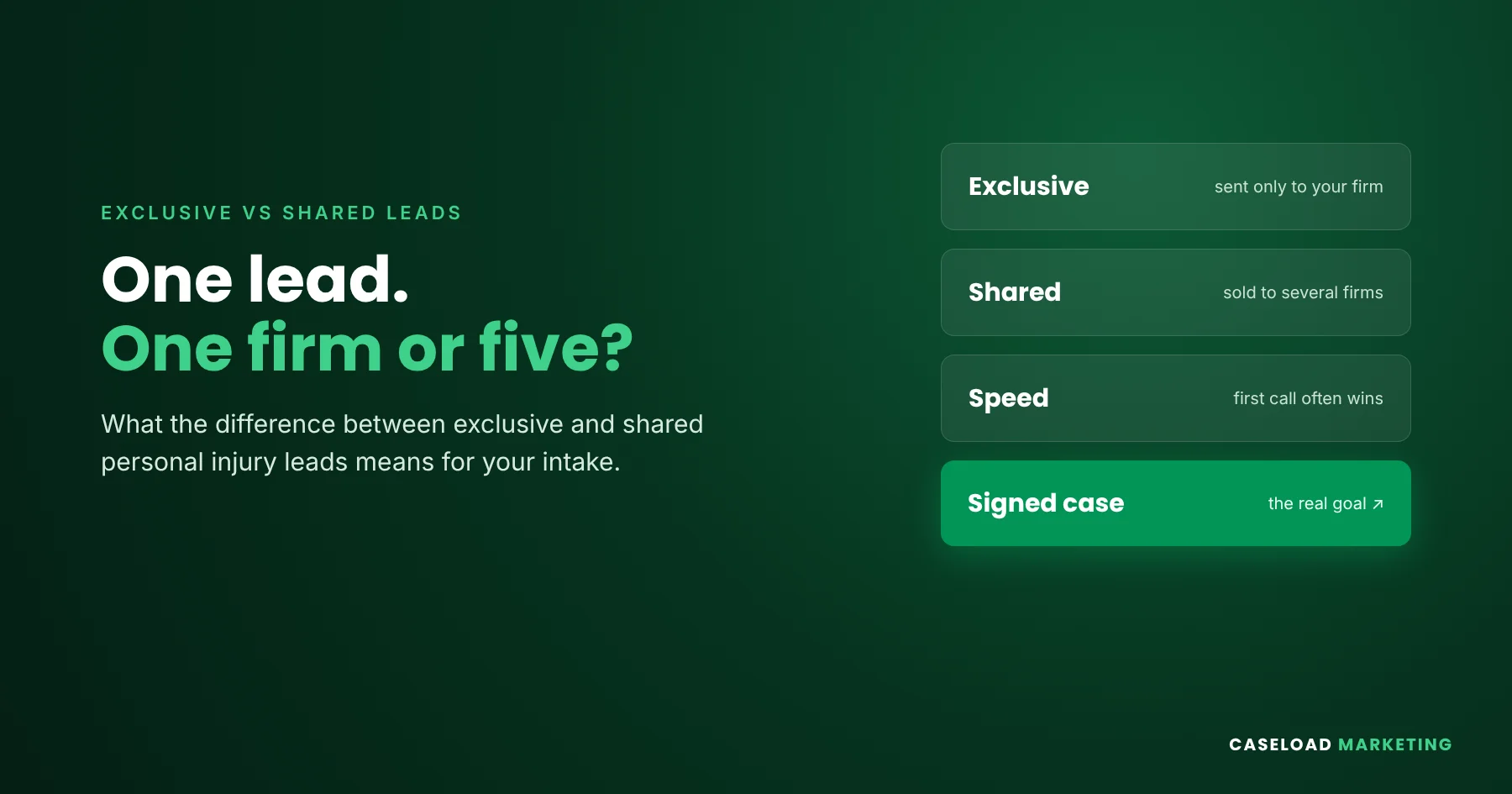
Exclusive vs shared personal injury leads comes down to who else gets the same inquiry. Exclusive leads are sent to only one law firm, while shared leads are sold to several firms at the same time. With an exclusive lead, only your intake team contacts the person. With a shared lead, the same person may hear from several firms within minutes, so speed and follow-up decide who signs the case.
Truck accident leads are inquiries from people hurt in crashes involving commercial trucks, such as semi-trucks, 18-wheelers and delivery vehicles. They differ from car accident leads because more parties can be involved, federal trucking rules apply, evidence needs to be requested early and injuries are often more serious, so intake needs to move quickly.
The personal injury marketing ideas that suit a busy firm are the ones that keep running without daily attention: Facebook and Instagram lead ads in the firm's service area, retargeting for people who visited but didn't call, a monthly client newsletter, a simple review-request habit and fast intake follow-up on every new inquiry.
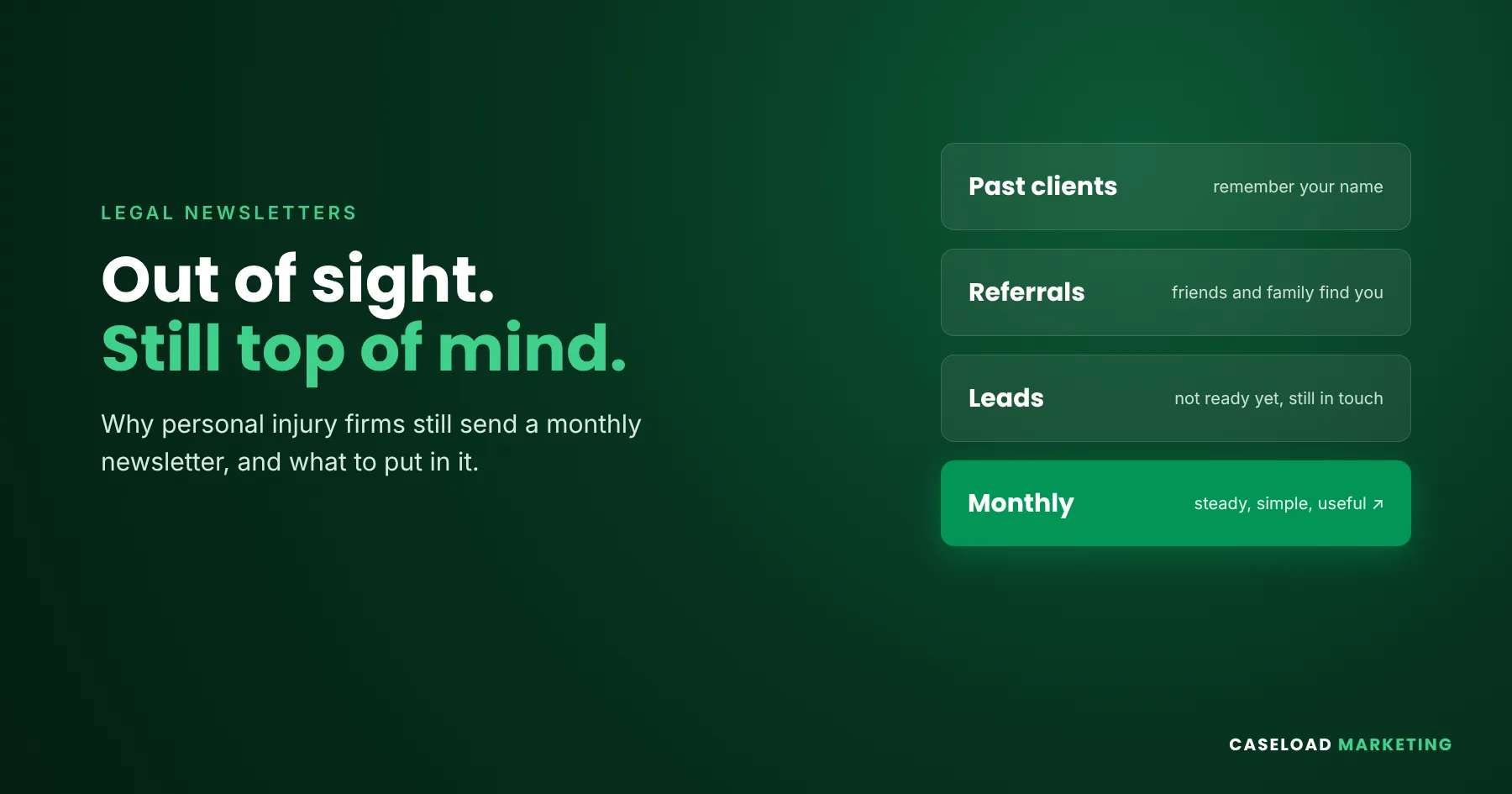
What is a legal newsletter? It is a regular email, usually monthly, that a law firm sends to past clients, contacts and people who asked about a case. For personal injury firms, a legal newsletter keeps the firm's name familiar between cases, so when someone is hurt, or a friend or family member is, the firm is the one they remember and call.
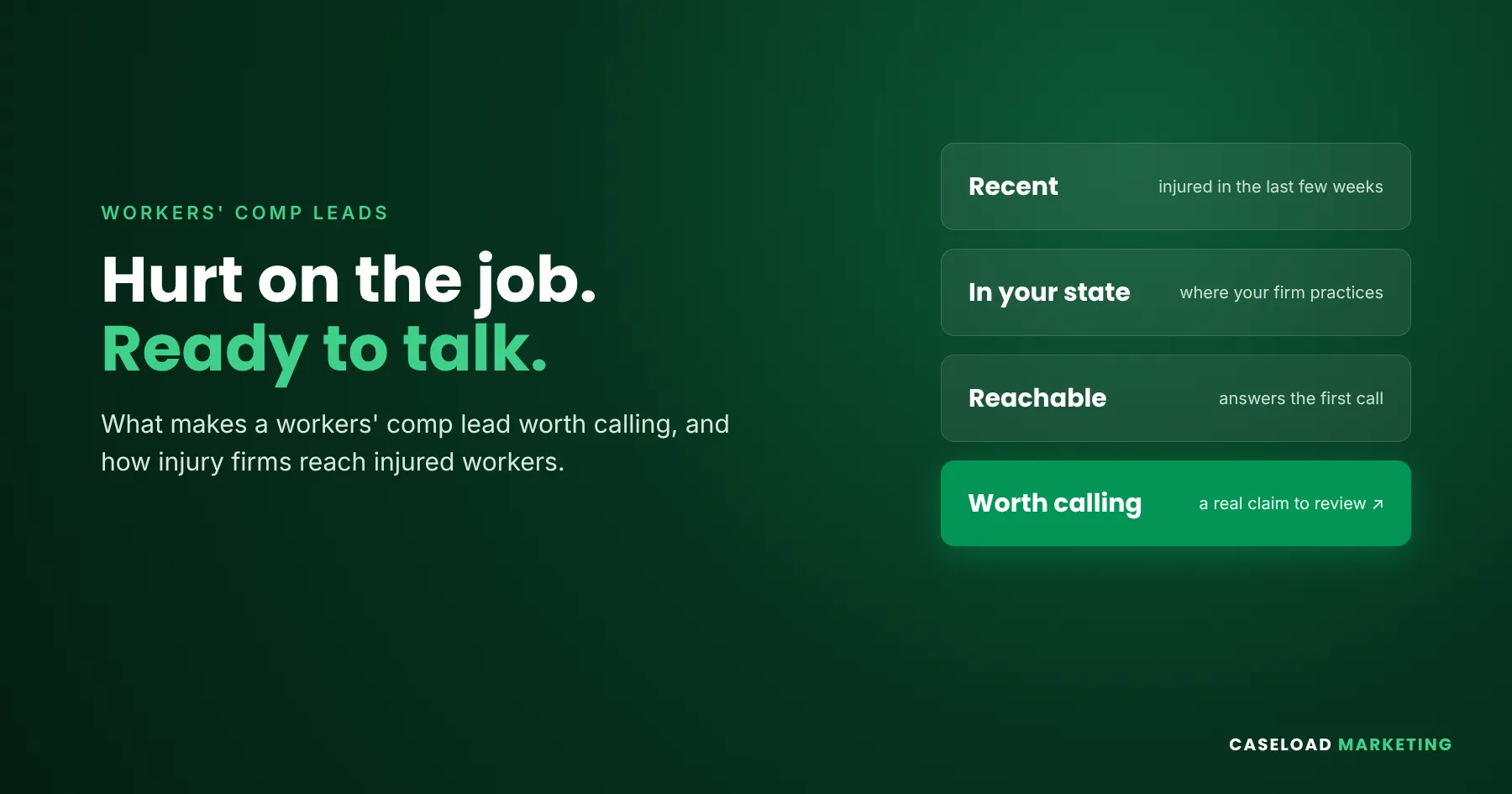
What are workers' comp leads? They are people who were hurt on the job and want help with a workers' compensation claim. The workers' comp leads worth calling come from recently injured workers in a state where the firm practices, who can be reached quickly and have agreed to be contacted. Personal injury firms that handle these cases usually reach them through Meta ads on Facebook and Instagram, simple lead forms and fast intake follow-up.
Can lawyers advertise on Facebook? Yes, in every US state, on both Facebook and Instagram. ABA Model Rule 7.2 lets lawyers share information about their services through any media, and a Facebook ad shown to a general audience counts as advertising, not solicitation. The ad still has to be truthful, name a responsible lawyer or firm, follow your state bar's rules and pass Meta's ad review.
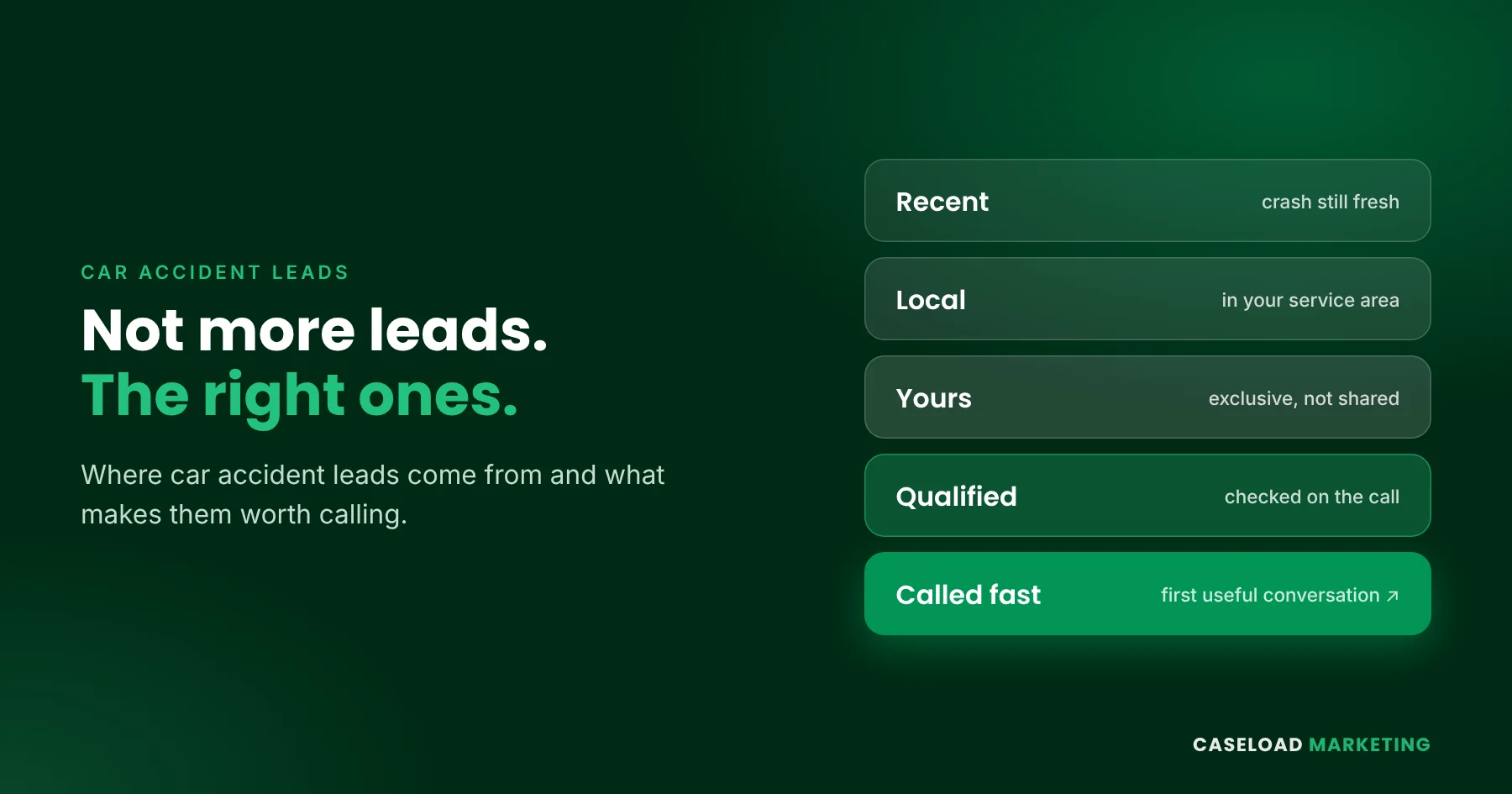
Car accident leads are people who were hurt in a crash and reached out to a law firm, by form, call or message, about a possible claim. They come from ads, search, referrals and lead vendors. The car accident leads worth the most are recent, in the firm’s service area, generated by the firm itself or exclusive to it, and called back quickly by an intake team that knows what to ask.
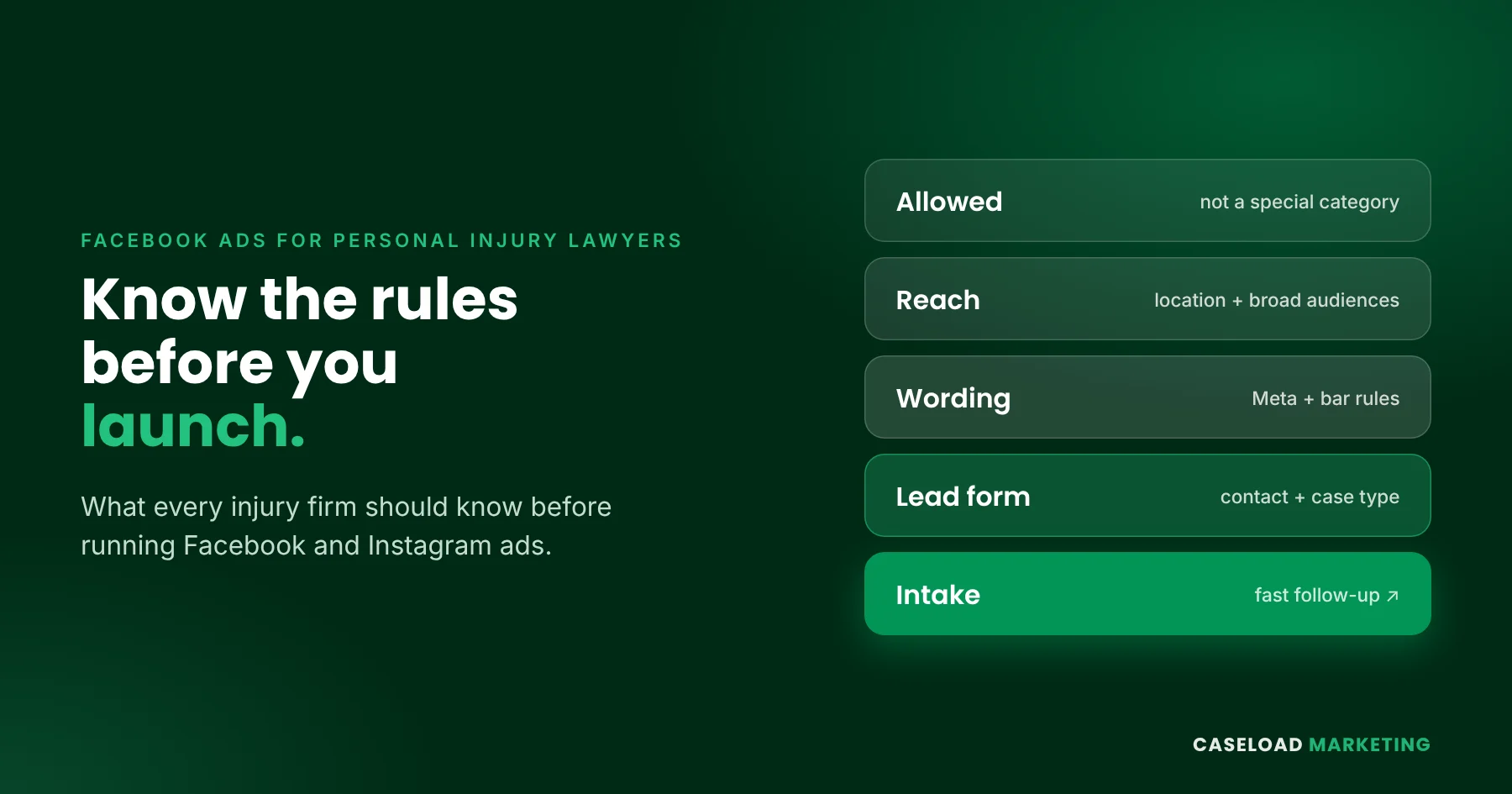
Facebook ads for personal injury lawyers work best when they reach people in the firm’s area before those people start searching, follow both Meta’s ad policies and the state bar’s advertising rules, and send every inquiry to an intake team that answers fast. Location, compliant wording, a simple lead form and quick follow-up matter more than clever creative.
AI search tools like ChatGPT, Google AI Overviews, Gemini, Perplexity and Copilot recommend law firms they can find, understand and trust. They draw on search indexes, the firm’s own website, reviews and mentions across the web. Firms that answer questions clearly, describe themselves the same way everywhere and keep earning real reviews give these tools the most to work with.
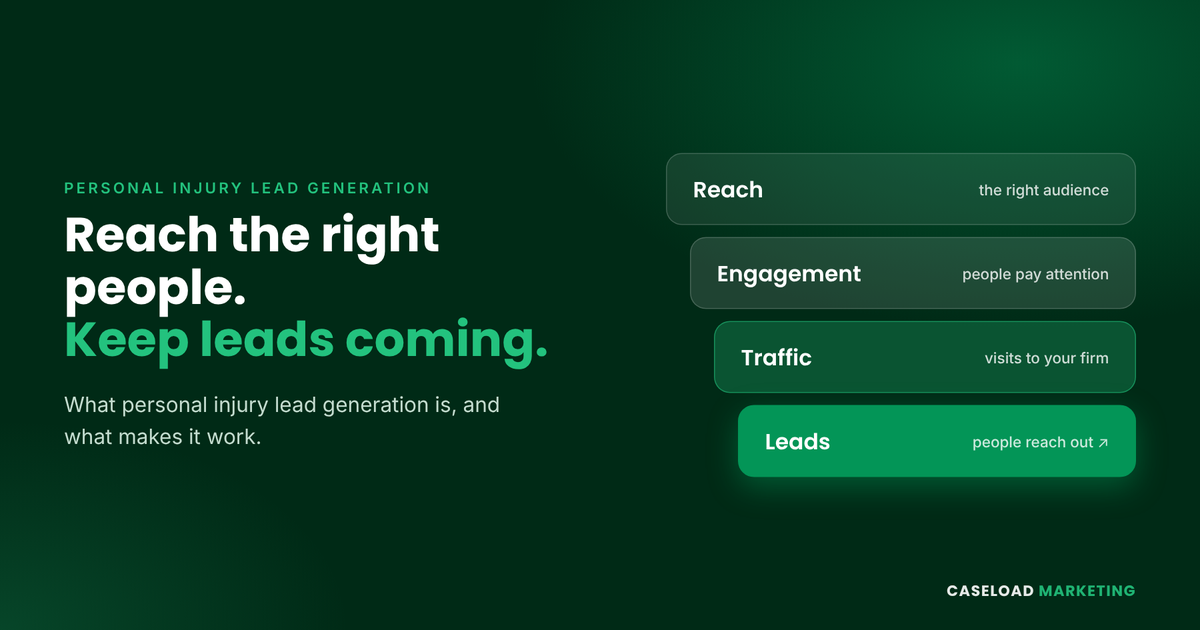
Personal injury lead generation is how a law firm reaches people hurt in an accident and gives them an easy way to get in touch. The strongest programs combine broad reach, messages that speak to specific case types, and a steady month-after-month presence so new leads keep coming in.
Our Clients
We partner exclusively with one firm per market to ensure a competitive edge in the highly competitive field of personal injury lawyer advertising, avoiding competition among our clients.
Due to the sensitive nature of our work, we maintain confidentiality in our partnerships. Our impressive client retention rate of 90% over a 12-month period underscores our commitment to client satisfaction and success. If you're interested in exploring our availability in your market, please contact us.
Need a boost in marketing your law firm? We've got you covered!
Let's discuss how we can elevate your strategy. Explore our services or get in touch—let's ensure your firm stands out!